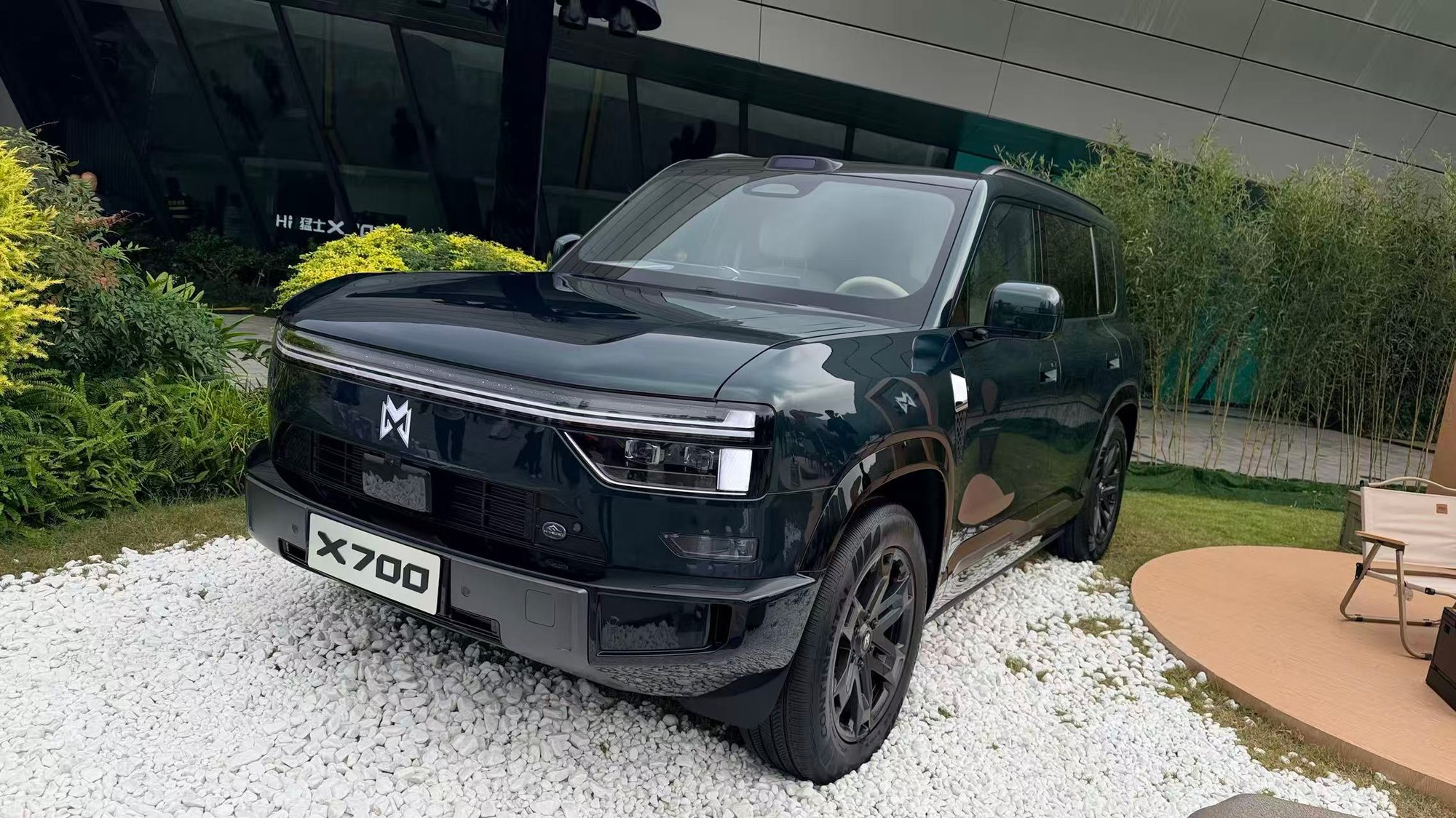
Preface: The M-Hero X700 is not a hardcore toy like the M-Hero 917 that starts in the hundreds of thousands—it is essentially a "family-first, off-road-capable-enough" boxy SUV aimed at family users.
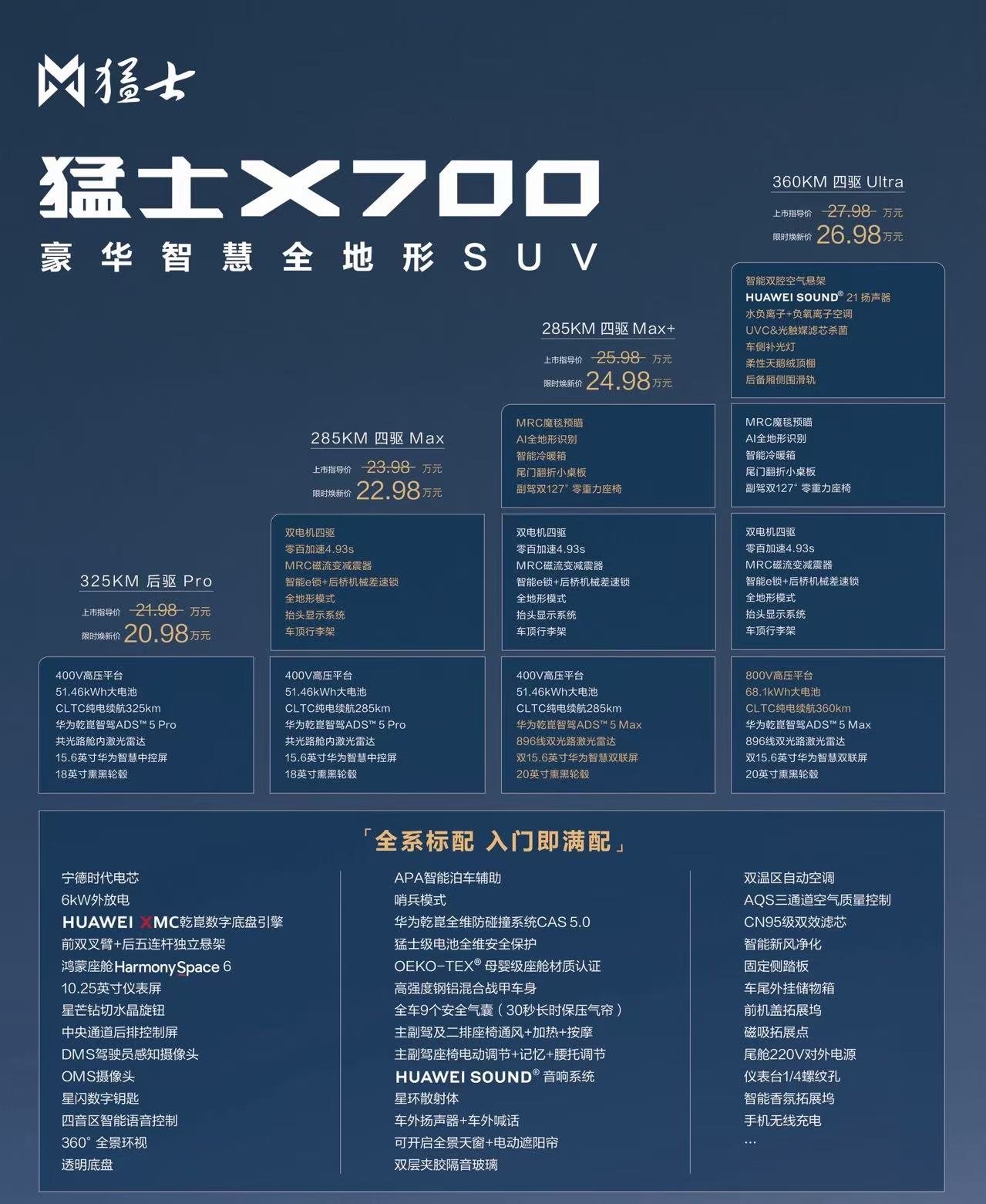
On October 24, the M-Hero X700 was officially launched with four models, priced at a limited-time 209,800 to 269,800 yuan. A mid-to-large boxy SUV over five meters long, equipped with Huawei Qiankun smart driving and HarmonyOS cockpit, with a starting price under 210,000—two years ago no one would have dared to price it this way. But what's more interesting is the chassis—it has no ladder frame. With a unibody construction, the official positioning is "soft-roading."
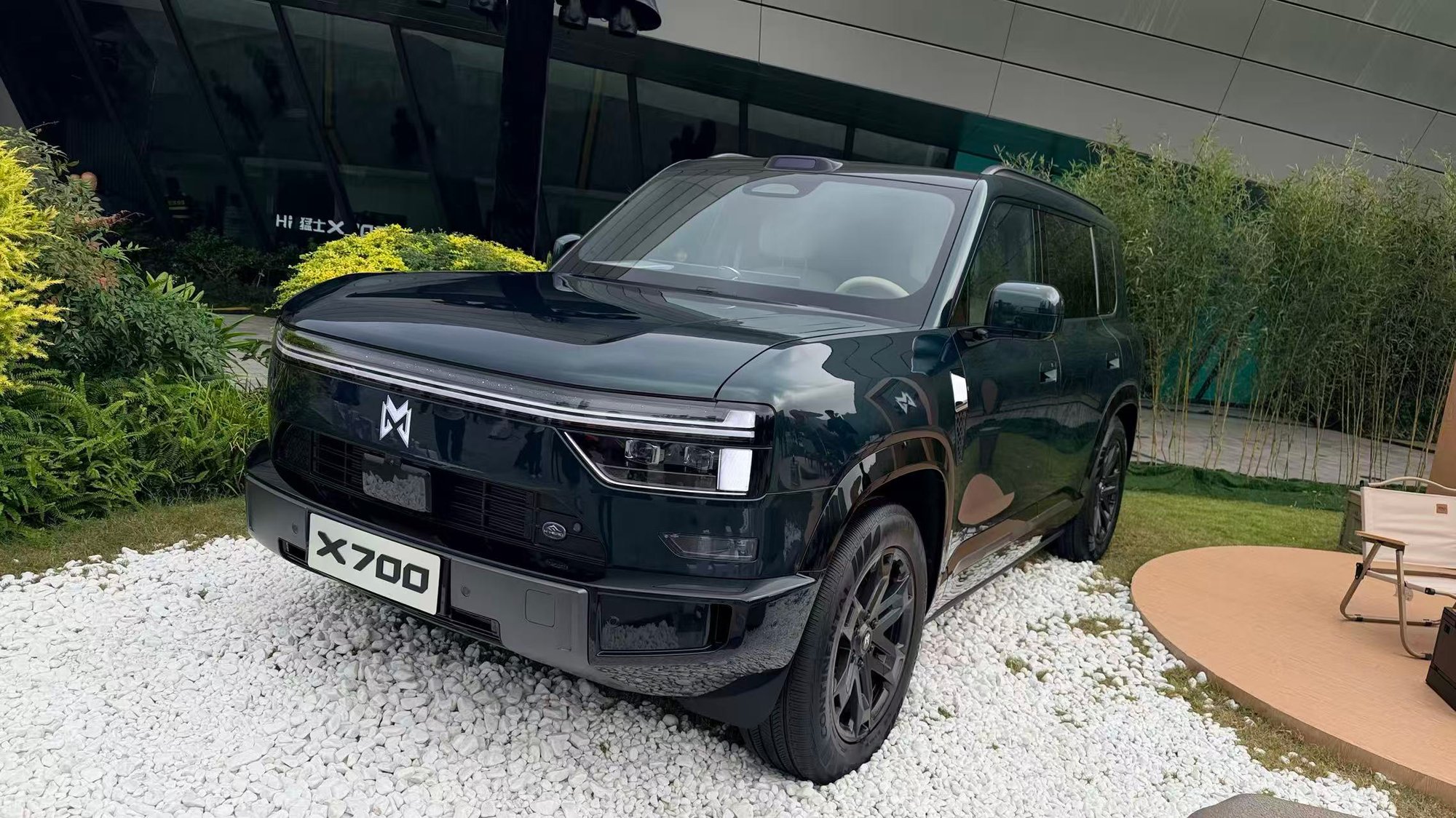
This makes the topic clear: the M-Hero X700 is not competing for the same pie as the Tank 500 Hi4-T (from 335,000) and the Fang Cheng Bao Bao 8 (from 379,800). With a price tens of thousands to over a hundred thousand lower, it is knocking on a different door.
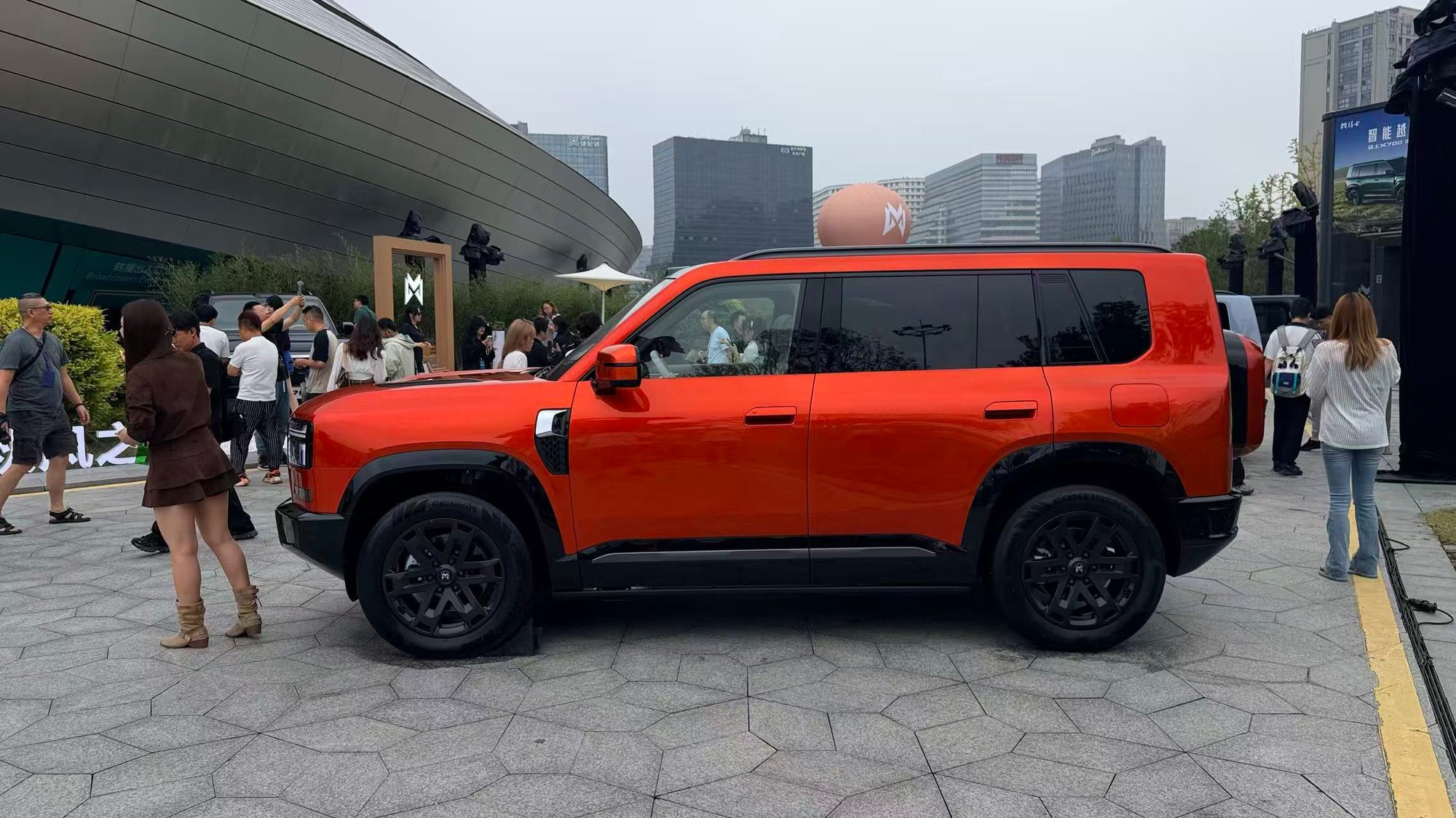
The highlights should start with "what removing the ladder frame has bought." The direct benefits of a unibody are on-road comfort and cost control, but M-Hero did not cut corners on the chassis. Dual-chamber air suspension plus MRC magnetorheological damping—the latter adjusting 1,000 times per second—combined with magic carpet preview, delivers a level of bump filtration on rough roads that traditional rigid-axle off-roaders cannot provide. The hard off-road metrics have not been watered down either: approach angle of 37.5°, maximum ground clearance of 328.8mm, wading depth of 800mm, plus rear-wheel steering that compresses the turning radius of a five-meter-class boxy SUV to 5.2 meters—U-turns on narrow roads are far more composed than expected. It is not "pretending to be off-road"; it is using a different chassis philosophy to cover the road conditions most people will actually encounter.
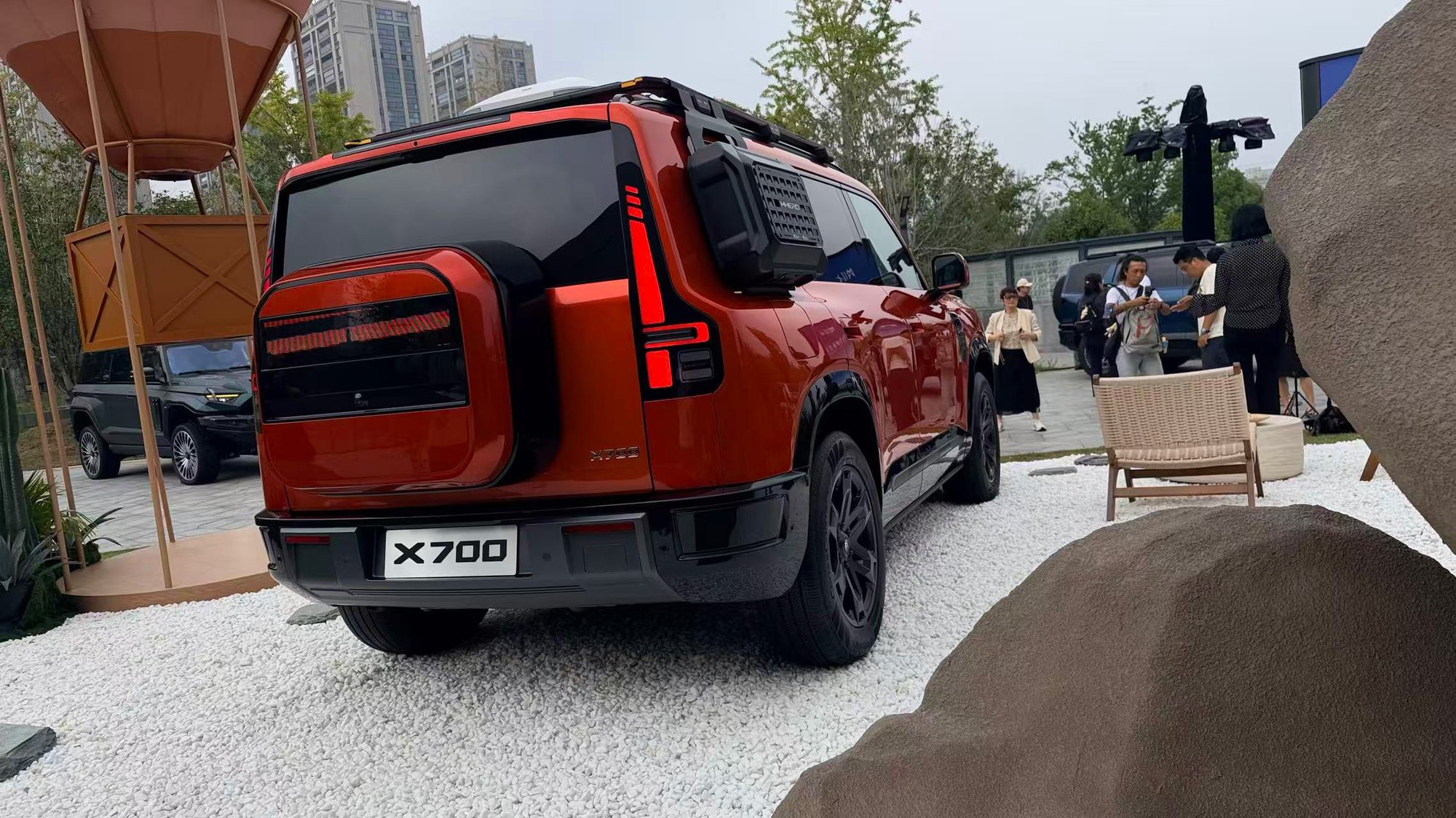
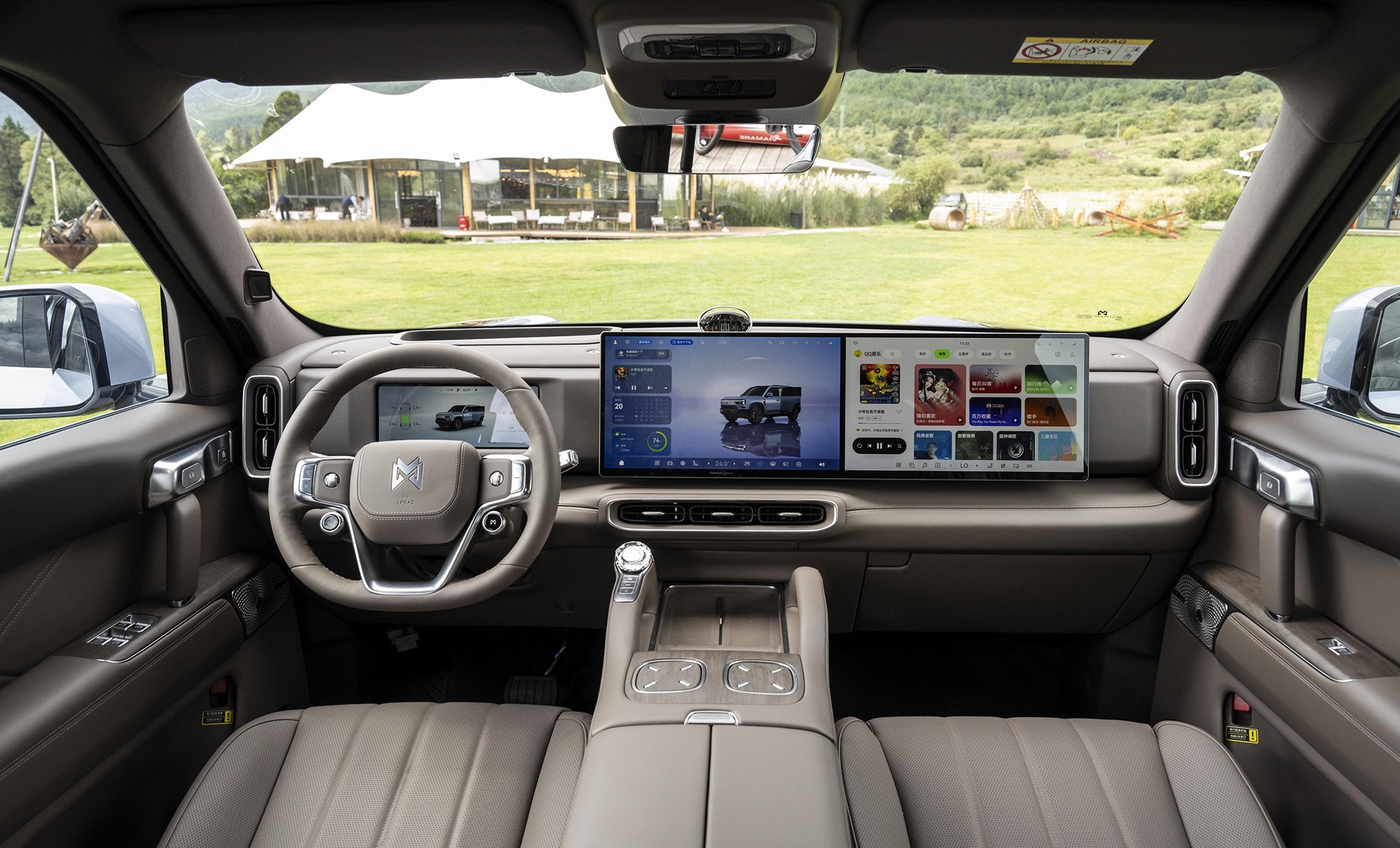
Smart driving is the second hook, and it carries some off-road-scenario specificity. Huawei Qiankun ADS 5 with an 896-line LiDAR—urban and highway NOA is basic fare; what is truly interesting is off-road NCA—navigation assist can also be activated on rural dirt roads, campus roads, and mountain trails, plus the off-road version XHUD projects pitch angle and suspension height directly onto the windshield, so you do not need to look down at the screen while traversing. Putting this system in a car starting just over 200,000—the value is not in how intimidating the specs are, but in extending "intelligence" from urban commuting to light off-road scenarios. The logic holds.
But objectively speaking, the unibody construction is a boundary. For heavy rock crawling, consecutive cross-axle situations, and prolonged high-intensity off-roading, the advantages of a ladder-frame vehicle in body torsional rigidity and long-term durability are determined by physical structure—this cannot be smoothed over with a spec sheet.
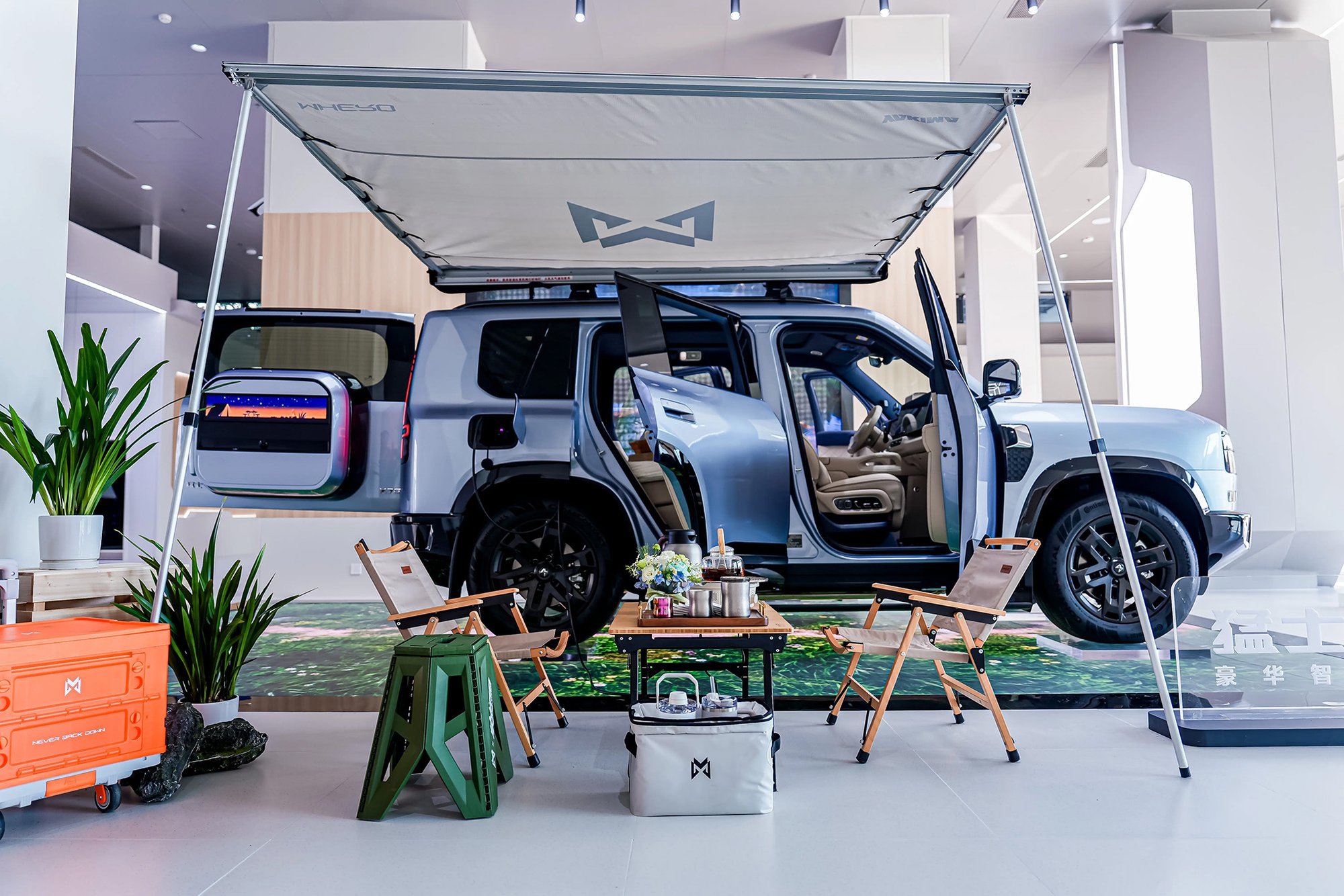
The cleverness of the M-Hero X700 is that it does not force a "hardcore off-roader" persona but instead aims its guns at the light-outdoor, camping, and short-trip traversal crowd—people who need the presence and capability of a boxy SUV, but who spend the vast majority of their mileage on city roads and highways. A 1.5T plug-in hybrid, the four-wheel-drive version hitting 100km/h in 4.93 seconds, and up to 360km of CLTC pure electric range—daily commuting can be done as an EV, and weekend excursions do not embarrass. This calculation is very pragmatic.
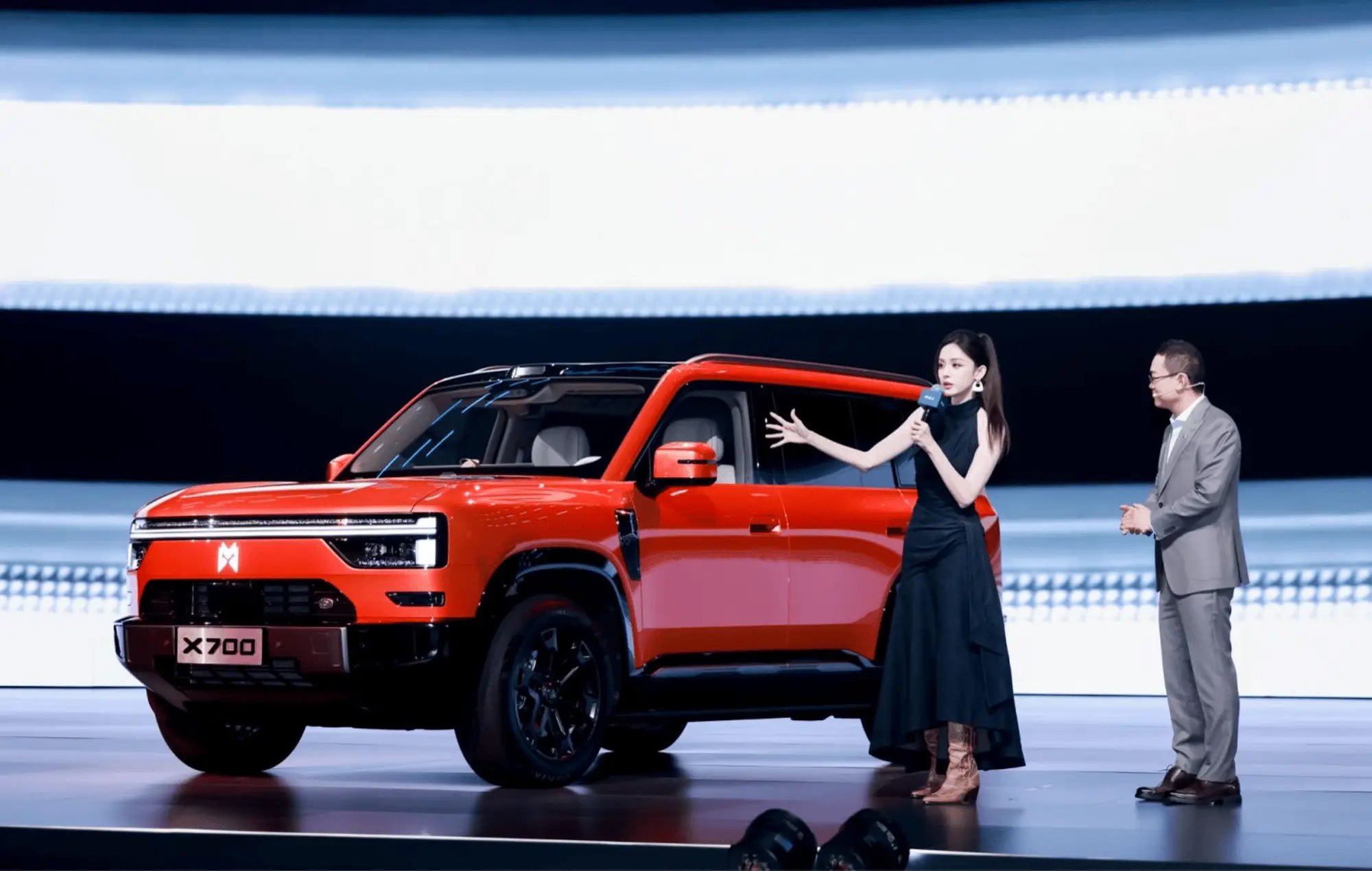
Car Review Agency: To sum up. The controversial point of the M-Hero X700—no ladder frame—is precisely its product definition. It uses a unibody chassis to achieve a lower price and on-road comfort, then uses air suspension, MRC, and Huawei smart driving to lift the "soft-roading" experience to a sufficiently respectable level. Starting at 210,000, what you get is the face of a boxy SUV, Huawei's brains, and a seriously tuned chassis. As for the ladder frame, leave that for those who truly need it to agonize over. This car does not try to please everyone, but it has thought clearly about who it wants to please—in 2026, when boxy SUVs are becoming increasingly competitive, that in itself counts as a kind of clarity.