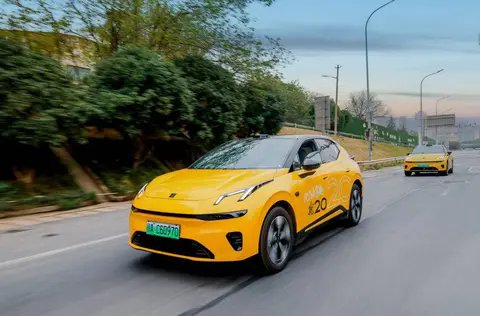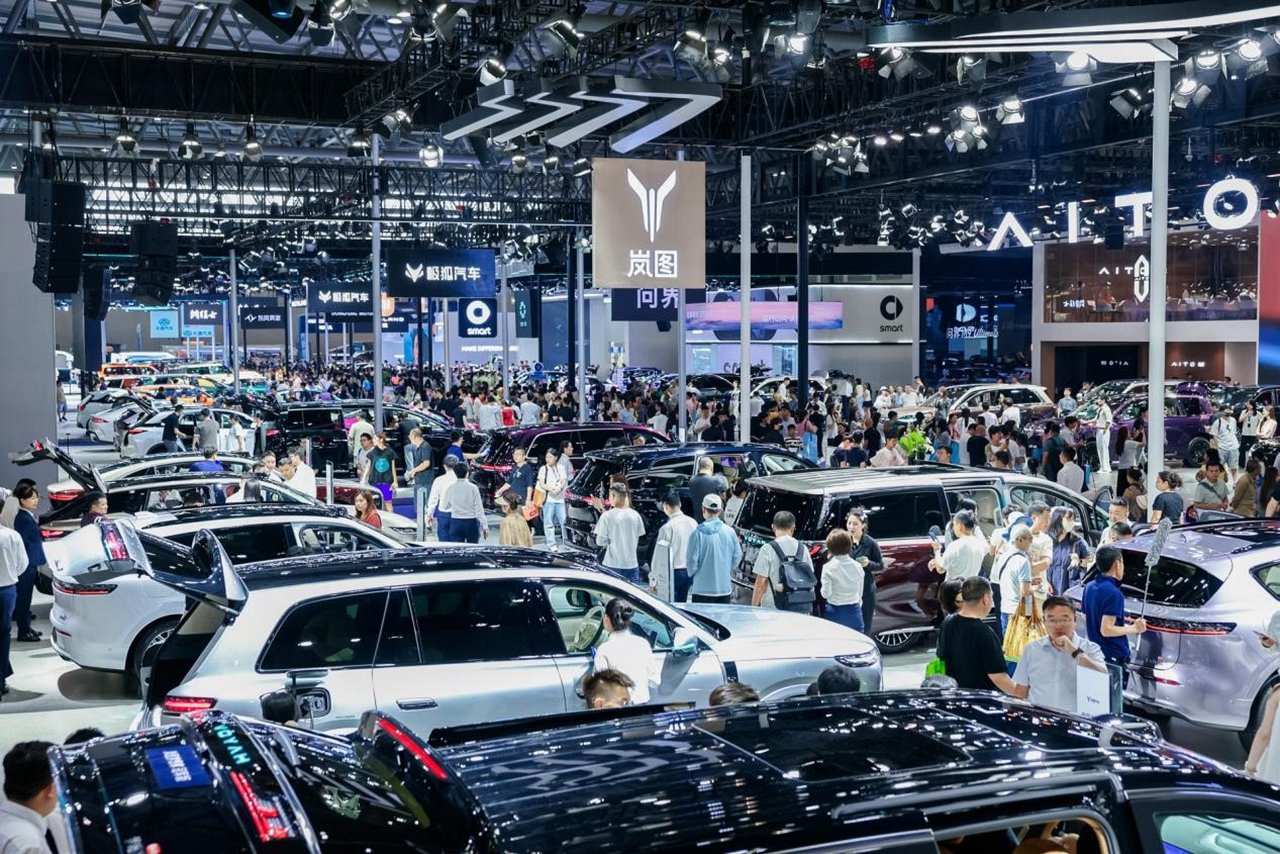
The smart cockpit may be the area in the automotive world most prone to a sense of "expectation gap" over the past two years.
On one hand, with large models being fully integrated into vehicles, almost every new car is turning the cockpit into a showcase of "AI content," with voice, multimodality, and agents rolling out one after another, and specs growing more aggressive from one company to the next. But on the other hand, users frequently encounter breakdowns in actual experience: the head unit understands the command but struggles to complete a closed-loop operation; it remembers a certain conversation and then forgets it entirely the next moment; when faced with complex travel needs, it either answers off-topic or dares not execute.
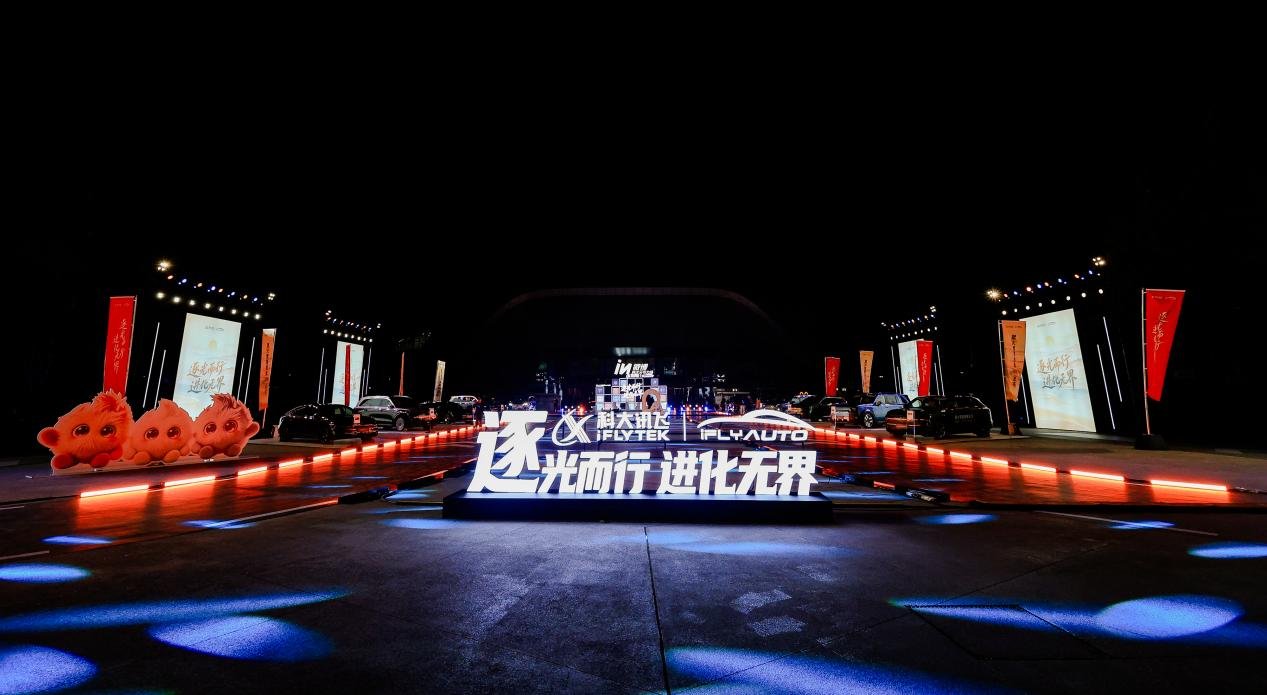
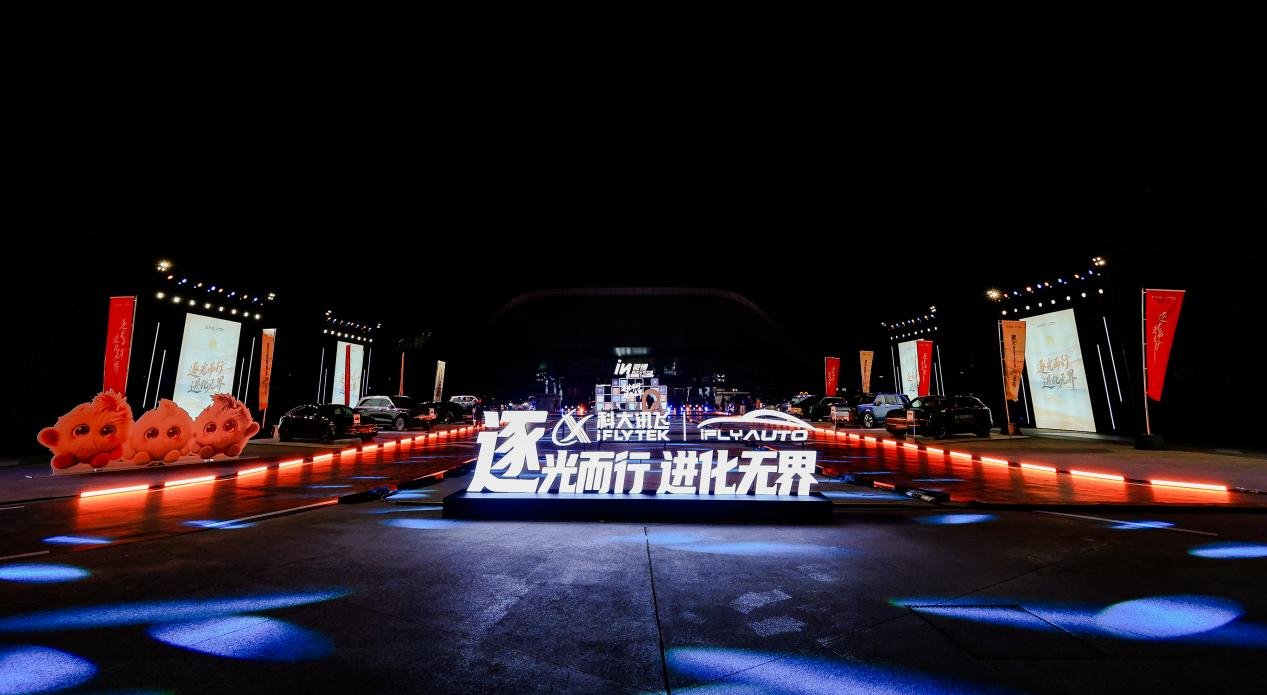
At the iFlytek Smart Automotive Product Technology Launch Event on October 21, the all-new SparkAuto Space 3.0 was officially released, and iFlytek actually posed a more pragmatic industry question: how can the smart cockpit truly leap from "understanding what is said" to "getting things done"?
Structural pain point: the cockpit lacks a unified "brain"
The production and sales scale of China's automotive industry has ranked among the world's highest for many consecutive years, and the penetration rate of intelligent features is also rising rapidly. But behind the high penetration rate is a lag in experience upgrades.
A common industry problem is that cockpits often "have ears but no brain." Voice, navigation, entertainment, and vehicle control are usually several separate subsystems operating independently, resulting in fragmented cross-domain experiences; the lack of long-term memory makes head units increasingly homogenized; large models carry hallucination risks, making core vehicle control functions something companies dare not easily delegate; and while model capabilities grow stronger, latency is hard to reduce.
These pain points all point to the same structural problem: the cockpit lacks a "unified brain" capable of connecting all modules together. If companies merely stack features or specs without solving the underlying architecture's scheduling problem, the experience cannot achieve a qualitative leap.
Architectural evolution: from command-based to human-like interaction
To solve this structural problem, iFlytek divides the evolution of cockpit interaction into three stages: command-based interaction, intelligent integrated interaction, and the human-like intelligent all-modal stage led by SOPHIA (a human-like intelligent all-modal automotive interaction architecture).
The core backbone of SparkAuto Space 3.0 is precisely the SOPHIA architecture, whose foundation consists of four systems—memory evolution, thinking and decision-making, all-modal perception, and multidimensional expression—all uniformly orchestrated by the vehicle-wide Master Agent. This architecture ultimately delivers three core values to users: an emotional companion that understands you better, an automotive steward that gets things done, and a hyper-immersive audio-visual master.
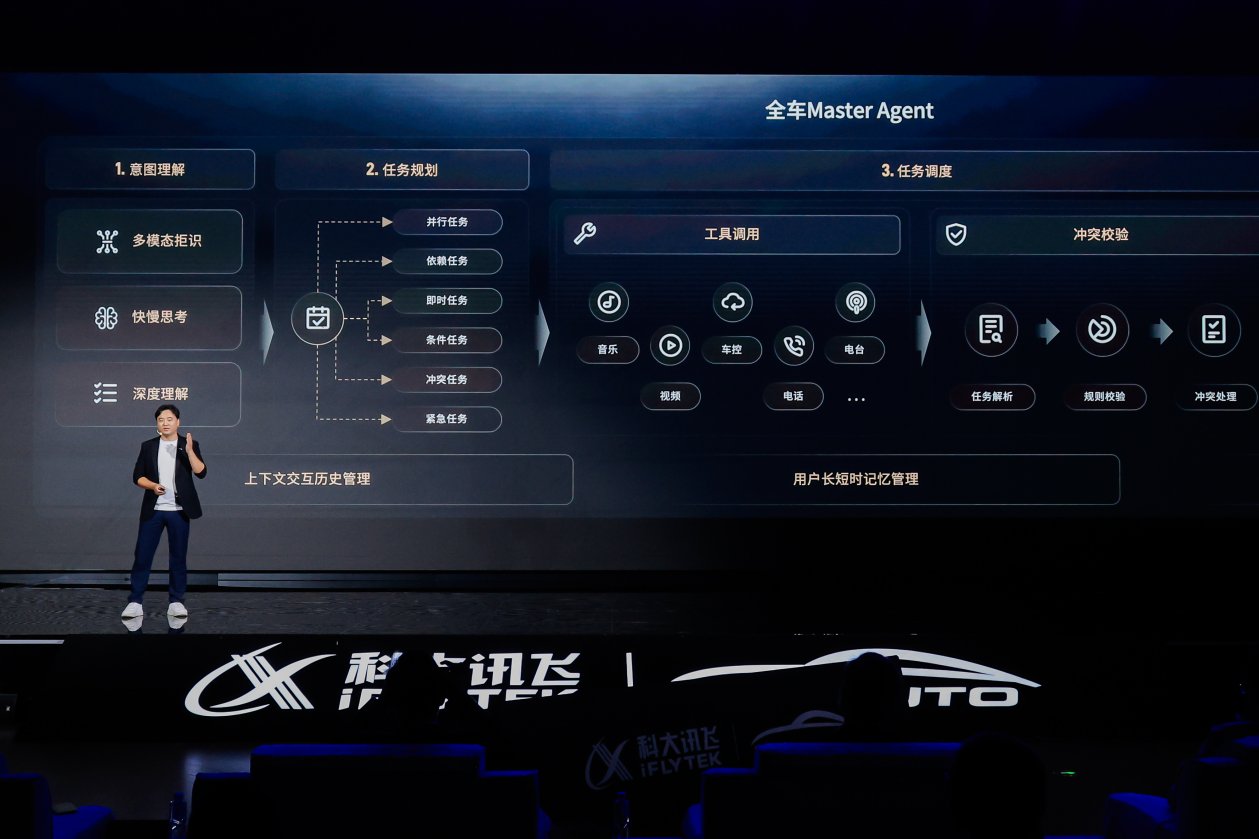
At the "understands you better" level, SparkAuto Space 3.0 builds a system with over 68 memory dimensions, covering short-term memory, long-term memory, and user profiles. To balance experience and privacy, highly sensitive memories are restricted to on-device storage, and queries require personal authentication.
Addressing the interaction challenges of multi-passenger travel, SparkAuto Space 3.0 achieves multi-person all-modal full-duplex capability. Through technological upgrades, the multi-person interaction response rate has risen above 95%, the interference rejection rate has reached above 98%, and interruption latency is controlled within 300 milliseconds. This means the system can accurately distinguish "who is speaking and to whom," effectively solving the pain point of the head unit chiming in randomly during multi-person conversations in the car.
In addition, exterior voice extends the interaction boundary to 30 meters outside the vehicle, supporting voiceprint authentication and speaking while walking; special sound recognition can reach up to 200 meters. End-cloud multimodal perception aggregates more than 100 capabilities, among which the on-device enhanced sentinel mode can identify 16 typical risk events, deliver results within 4 seconds per event, and achieve a recognition accuracy rate of 90%, significantly outperforming the segment.
Experience watershed: from "looking up information" to "getting things done"
For AI integration into vehicles at the current stage, the head unit being able to understand dialects and remember your preferences can only be considered the "preamble." In real driving scenarios, what users truly desire is "results." You understand what I mean, and then you help me get the matter settled. In this dimension, the ability to "get things done" is the watershed that determines the quality of the experience.
In complex travel scenarios, the upgraded Master Agent navigation brain can accurately understand vague semantics, time constraints, and conditional branches. For example, for "find a restaurant not far from both the company and Swan Lake," its correct understanding rate for complex travel intentions can reach above 95%.
More noteworthy is the completion of the ecosystem loop. iFlytek has upgraded its strategic partnership with Alipay and launched the "XunBao Plan." The Alipay in-vehicle assistant is integrated into SparkAuto Space 3.0 and uniformly orchestrated by the Master Agent, with the two parties having completed connectivity in capabilities such as account interoperability and in-vehicle AI payments. This enables the cockpit to truly break through the limitation of "looking up information" and implement real "getting things done" scenarios such as seamless high-speed tolling, seamless parking payment, and picking up packages along the way.
In addition, in terms of the health cockpit, iFlytek Xiaoyi has been integrated, with health consultations having served a cumulative 200 million times and more than 35 million users, covering 2,600 common conditions and knowledge of more than 60,000 common medications. FaceID identifies all vehicle occupants and establishes independent health records, one file per person, connecting the vehicle, home, phone, cloud, and mainstream wearable devices from Huawei, Apple, and others, forming a full closed loop of "measurement, inquiry, and diagnosis." In parking scenarios, the Free Parking Agent is deeply integrated with the intelligent driving system, covering autonomous parking, voice-controlled vehicle repositioning, and summon pickup.
Acoustic experience: the hyper-immersive audio-visual master
As the visual "big screen" dividend of smart cockpits gradually peaks, the next battleground determining generational experience differences is shifting toward "hearing." A system that truly understands you must not only be able to listen but also to express. Behind this lies a ground-up reconstruction of the full-link acoustic architecture.
iFlytek's industry-first GaN (gallium nitride) audio architecture not only reduces the weight of the entire system by 30%, but combined with Black Gold series speakers and 300W cinema-grade subwoofer, it improves the listening experience by 20%. Combined with Hyper-Immersive Surround Sound Pro 3.0, the system can use AI to reconstruct ordinary 2.0 audio sources into 7.1.4 panoramic sound in real time, greatly lowering the threshold for panoramic sound content.
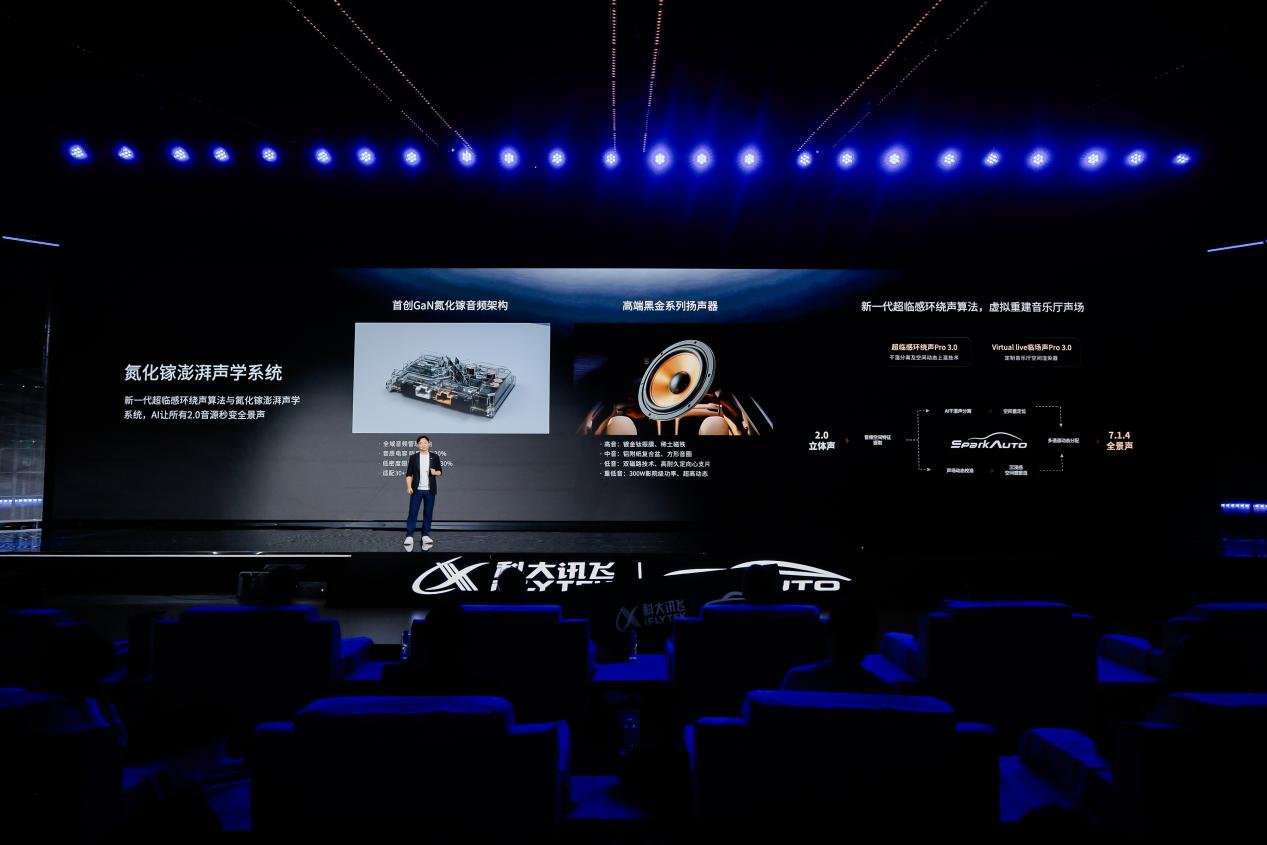
In terms of in-cabin sound field control, Smart Sound Field Zoning 3.0 achieves sound isolation of up to 30dB for dual zones and 26dB for four zones. The driver listens to navigation, the front passenger watches a show, and the children in the rear seat listen to nursery rhymes—truly achieving "multiple sounds in one cabin without interference." Meanwhile, the debut super headrest acoustic system integrates directional playback and active noise cancellation (up to 9dBA depth) into the headrest, so navigation announcements float only by the driver's ear without disturbing other resting passengers.
Foundation support: end-cloud collaborative computing power and mass-production confidence
In fact, whether it is multimodal perception, scheduling of complex tasks, or millisecond-level acoustic algorithms, the "ceiling" of these front-end experiences is often determined by the "floor" of underlying computing power and model architecture. The biggest real-world gap in integrating large models into vehicles is the trade-off between computing latency and scenario complexity.
SparkAuto Space 3.0 adopts an end-cloud collaborative dual-mode combination: the cloud-based SparkAuto 1.0 on the H20 platform has been measured with a 350K context cache hit rate exceeding 99.5% and a first response time of less than 800 milliseconds; the on-device SparkAuto 1.0-EMM supports more than 100 scenarios, and its industry-first 35B-A3B model on the Jetson Thor platform achieves a first-frame time of less than 650 milliseconds and a 75% reduction in peak memory usage.
In terms of task allocation, iFlytek's approach is: interactions that are high-frequency, real-time, and involve sensitive data are closed-loop on the device side, while complex understanding, planning, and tool scheduling are handed to the cloud, finding a balance between latency and invocation cost. This also poses a challenge to automakers' hardware BOM costs, and the popularization of high-end on-device models still requires iterative support from hardware platforms.
Against the current industry background of frequent emphasis on "full self-development," iFlytek has chosen the path of "open co-creation." Automakers lead brand and platform definition, while iFlytek provides underlying toolchains and technical services. Currently, its ecosystem platform has integrated 60+ information sources, with average daily invocations reaching 220 million.
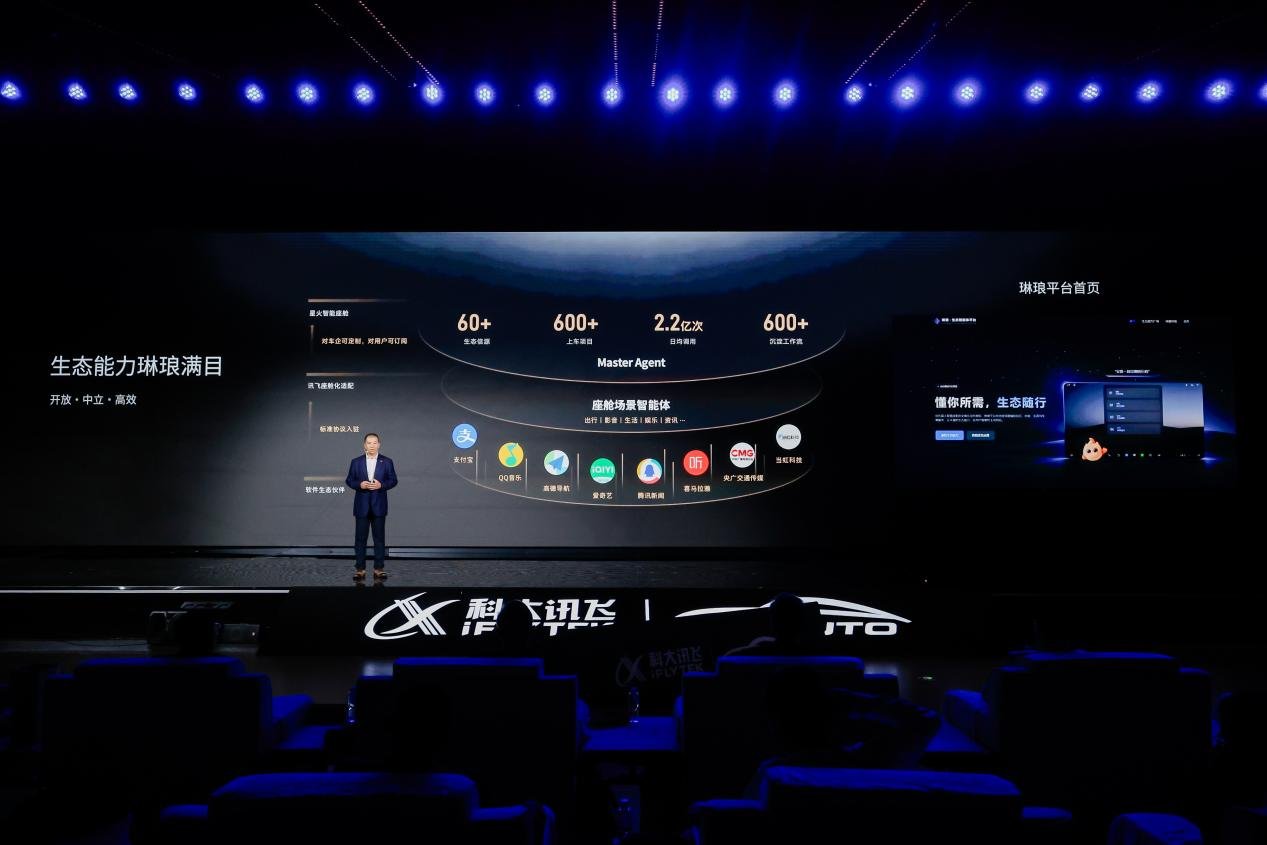
From the data perspective, iFlytek's scale advantage in the automotive field has been established: cumulative installations exceeding 81 million vehicles and partnerships with more than 50 automakers; multilingual support for overseas markets in 32 languages, covering 60 countries and regions, with 80% of new overseas vehicle models choosing iFlytek.
Moreover, SparkAuto Space 3.0 carries the label of "mass production upon release," with brands such as Chery, Great Wall WEY, and Dongfeng Nissan having taken the lead in adopting it, and it has obtained three certifications: the first AI multimodal smart cockpit in the industry from CATARC TOP Intelligence, the 2026 Automotive Smart Cockpit Leading Technology Achievement, and the 2026 Automotive New Quality Productive Forces Typical Case. The installed base of 81 million vehicles provides real validation ground for continuous technological iteration.
Final thoughts
Competition in smart cockpits is comprehensively shifting from "whether there is a large model" to "whether the cockpit can truly be useful." iFlytek's choice this time is highly groundbreaking: using a unified brain to truly connect scattered functions, and then using an end-cloud dual-mode combination to push cutting-edge experiences toward million-level mass production. The direction has been pointed out, and the road will naturally grow wider.
Returning to the gap mentioned at the beginning: specs are stacked higher year after year, yet users find it increasingly difficult to say "this car is really easy to use." The problem has never been whether the head unit is smart, but whether it can truly accomplish something for people based on what it understands. The answer iFlytek gives this time is essentially to pull the industry competition from "who has more features" back to the more fundamental question of "whose system is stable and whose service can close the loop." This may not be the only correct path, but at least it shows that in the second half of smart cockpits, the competition is no longer about who tells a bigger story, but about who can bring large models down from the exhibition stand and install them into the experience users actually use and can rely on every day. The direction is already right; next, it is just a matter of who lands it first.