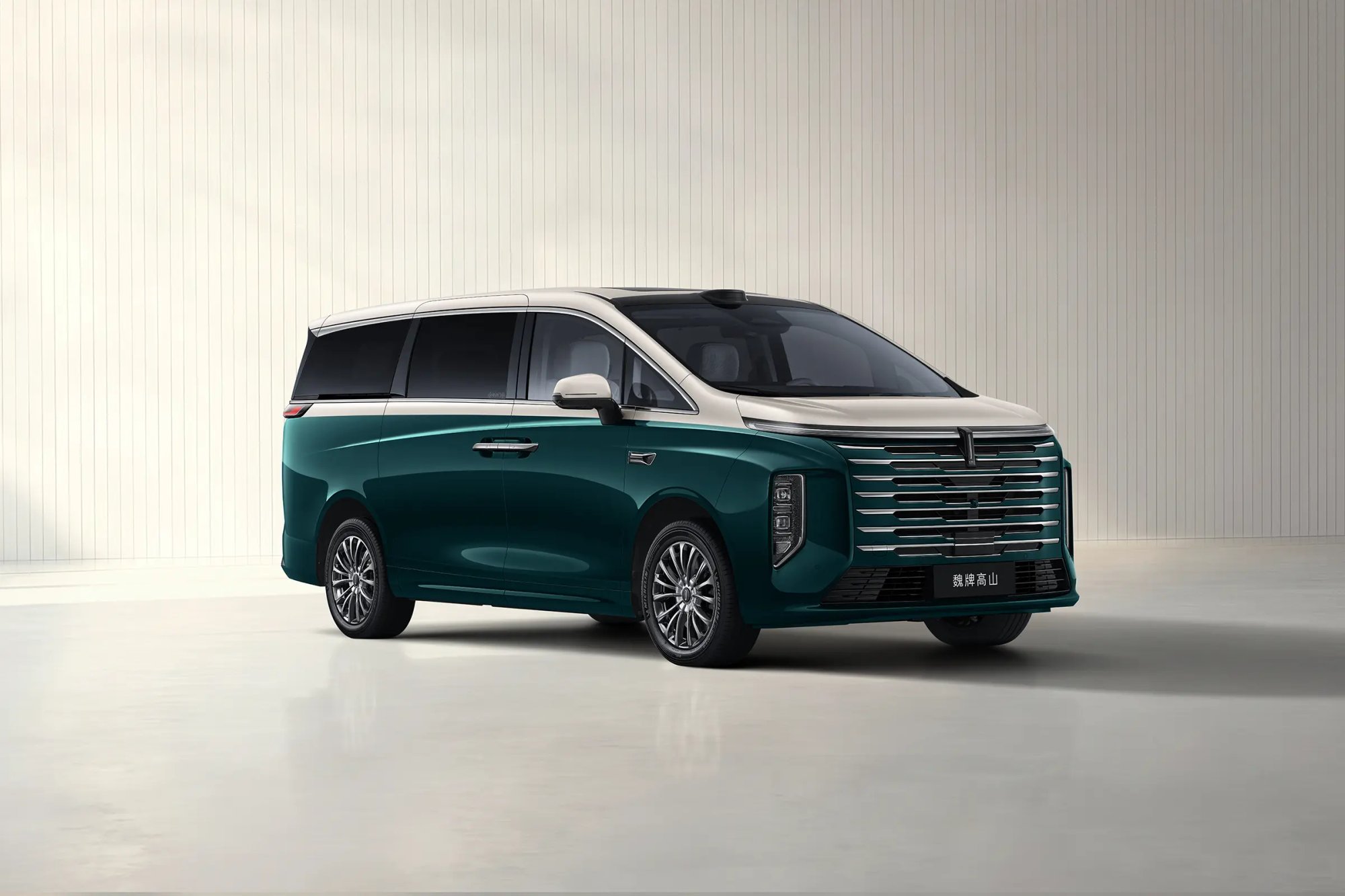
First, let's look at the newly launched Gaoshan 8 HEV. Limited-time benefit price starts at 259,800 yuan, and the high-trim version with lidar is 279,800 yuan.
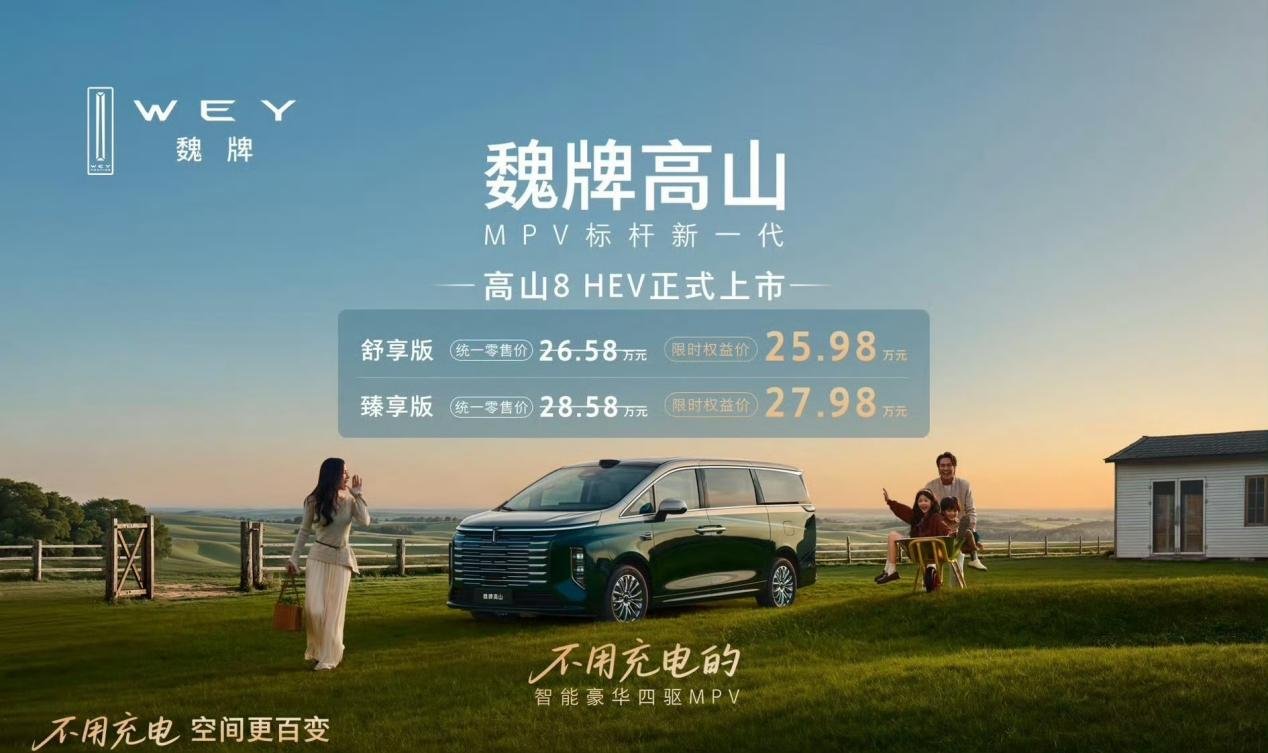
The body dimensions are unchanged: 5,280 mm long, 3,145 mm wheelbase, still a 2+2+3 seven-seat layout, fully flat floor, and a 5.7-meter turning radius. For power, it has switched to a 2.0T Miller-cycle hybrid engine that can run on 92-octane gasoline, paired with a four-speed DHT and Hi4 all-wheel drive. System combined output is 322 kW, and 0-100 km/h takes 5.9 seconds.
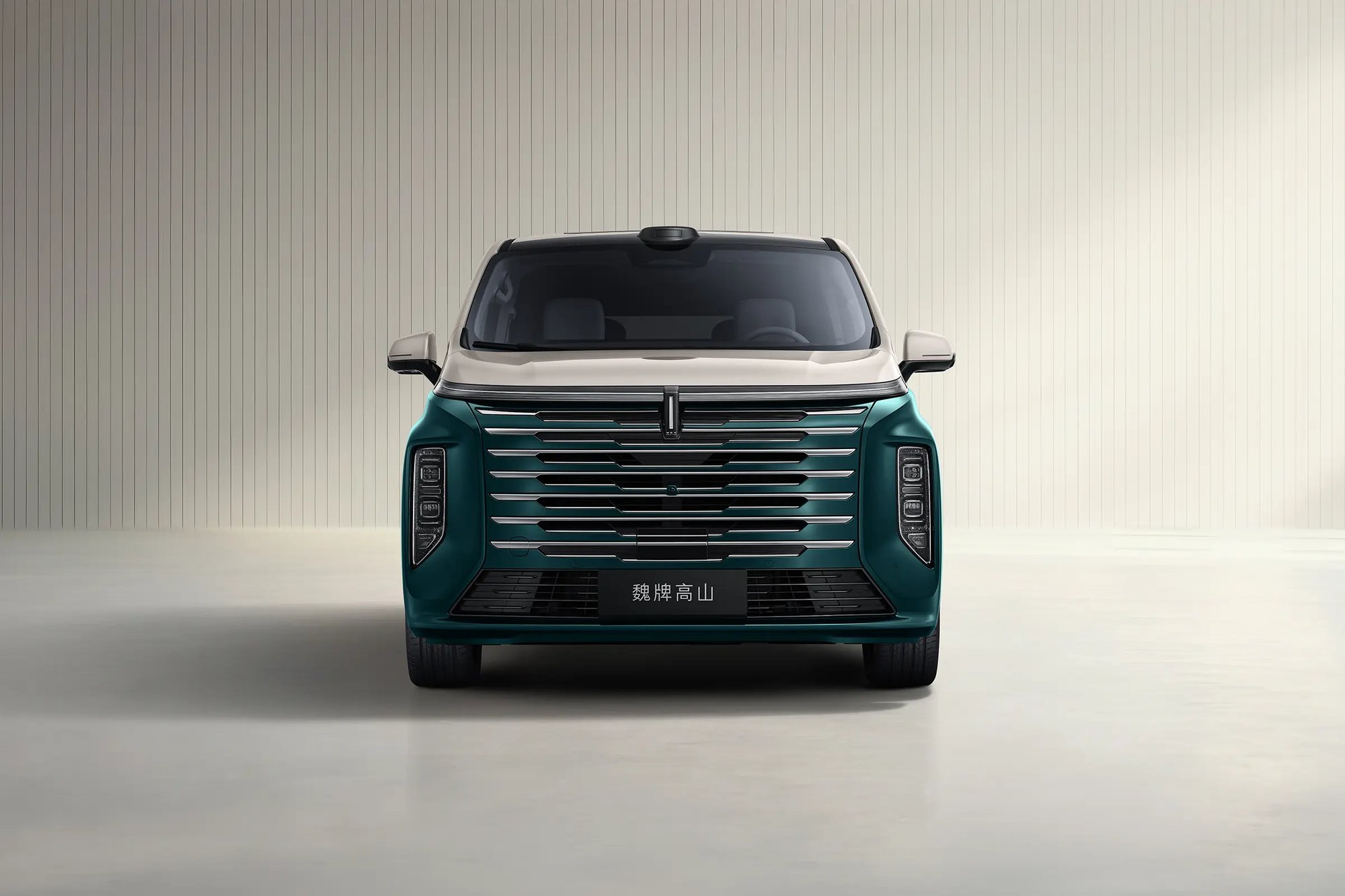
The battery is very small, only 3.64 kWh, and cannot be charged externally. It is mainly used for buffering, low-speed electric drive, and maintaining power for in-car electronics and the all-wheel-drive system, and cannot run purely electric segments on its own. WLTC combined fuel consumption is 6.92 L/100 km. The chassis uses front MacPherson struts and an all-aluminum rear five-link setup, with HRS hydraulic rebound damping. The high trim also has lidar and Coffee Pilot 3 advanced driver assistance, supporting urban NOA, which is relatively uncommon among blue-plate gasoline-hybrid MPVs.

Next, let's talk about the familiar Gaoshan 8 PHEV. It has a 1.5T engine and a large 53.9 kWh battery, with CLTC pure electric range of 270 km and combined range of 1,199 km with a full tank and full charge. 0-100 km/h takes 5.7 s, a little quicker than the HEV. For daily commuting, it can run directly on electricity, with low electricity cost, and it also supports 6.6 kW external discharge, which is very convenient for cooking while camping. But its shortcoming also comes from this large battery: the car is heavier and the price threshold is higher. If you cannot find a charging pile for a long time and keep driving with a depleted battery, carrying such a large battery actually makes fuel consumption less impressive.
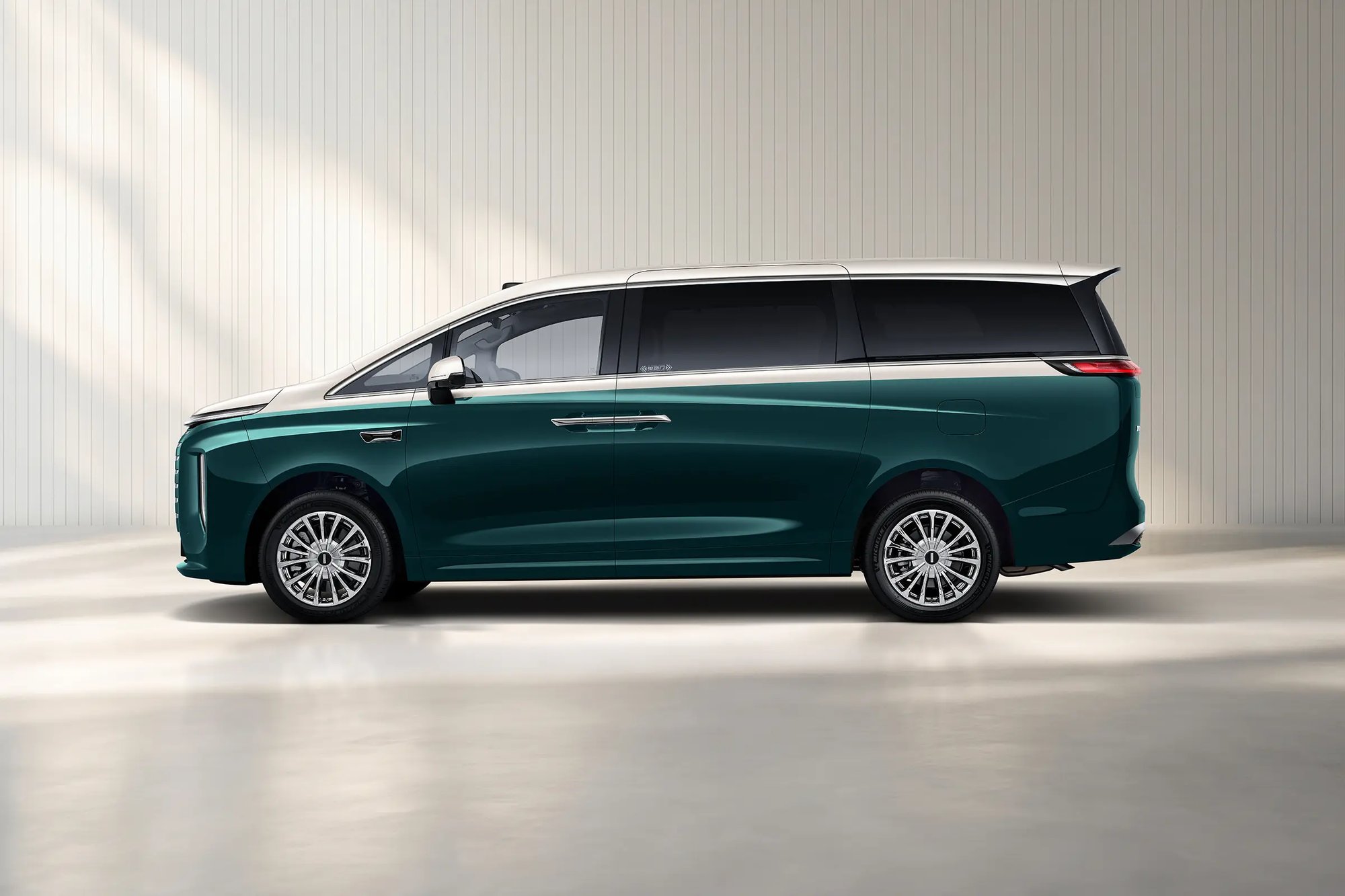
So how should you choose between the two cars?
First, the HEV. If your parking space is shared, the property management does not allow installing charging piles, charging stations outside are far away, and you worry about queues at highway chargers during holidays, then the HEV is very worry-free. No need to plan charging time, just fill up and go. For friends who often drive long distances or like family cross-province trips on weekends, the HEV feels more like a traditional gasoline car. It has no pure electric range and does not have to bear the extra weight of a large battery. WLTC combined fuel consumption of 6.92 L is an acceptable level for a fully equipped mid-to-large MPV with all-wheel drive. It also has Hi4 all-wheel drive, for better stability on rainy and snowy roads.
Of course, the HEV also has shortcomings. It uses a blue plate, so in plate-restricted cities you cannot enjoy the policy benefits of a green plate, and it lacks the low-cost pure electric commuting experience, since every kilometer burns fuel.
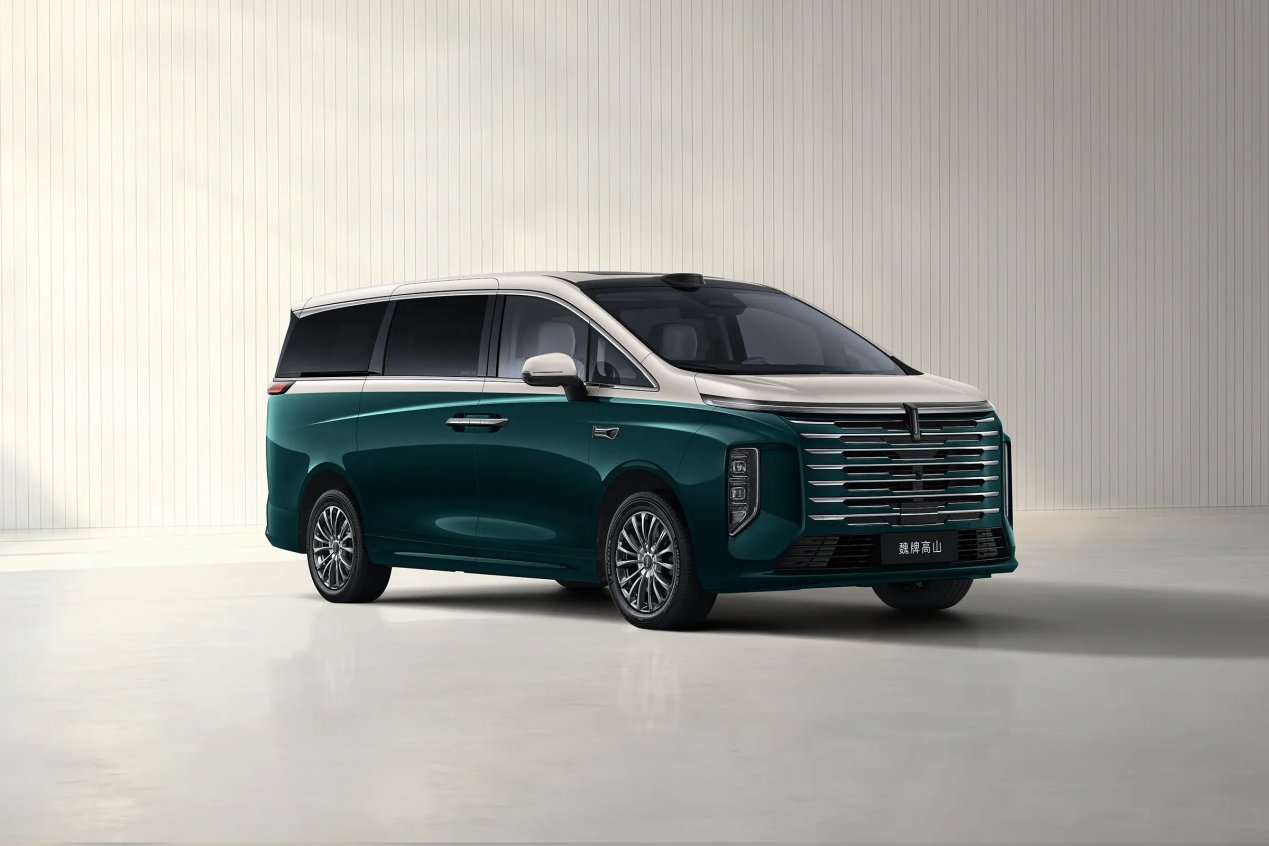
Now the PHEV. If your home parking space can have a charging pile installed, your daily commute is a few dozen kilometers, you plug it in at night, and on weekdays you can basically avoid burning fuel, then the usage cost is very obvious. For short weekend trips, external discharge is also more useful, and the whole family can make tea and cook outside without any problem. But if you do not have stable charging conditions, buying it means spending more money on a large battery that is hard to use well, so you must consider your own situation carefully.
Having said all this, I also want to ask the car friends watching: if it were you, would you lean more toward the HEV or the PHEV?