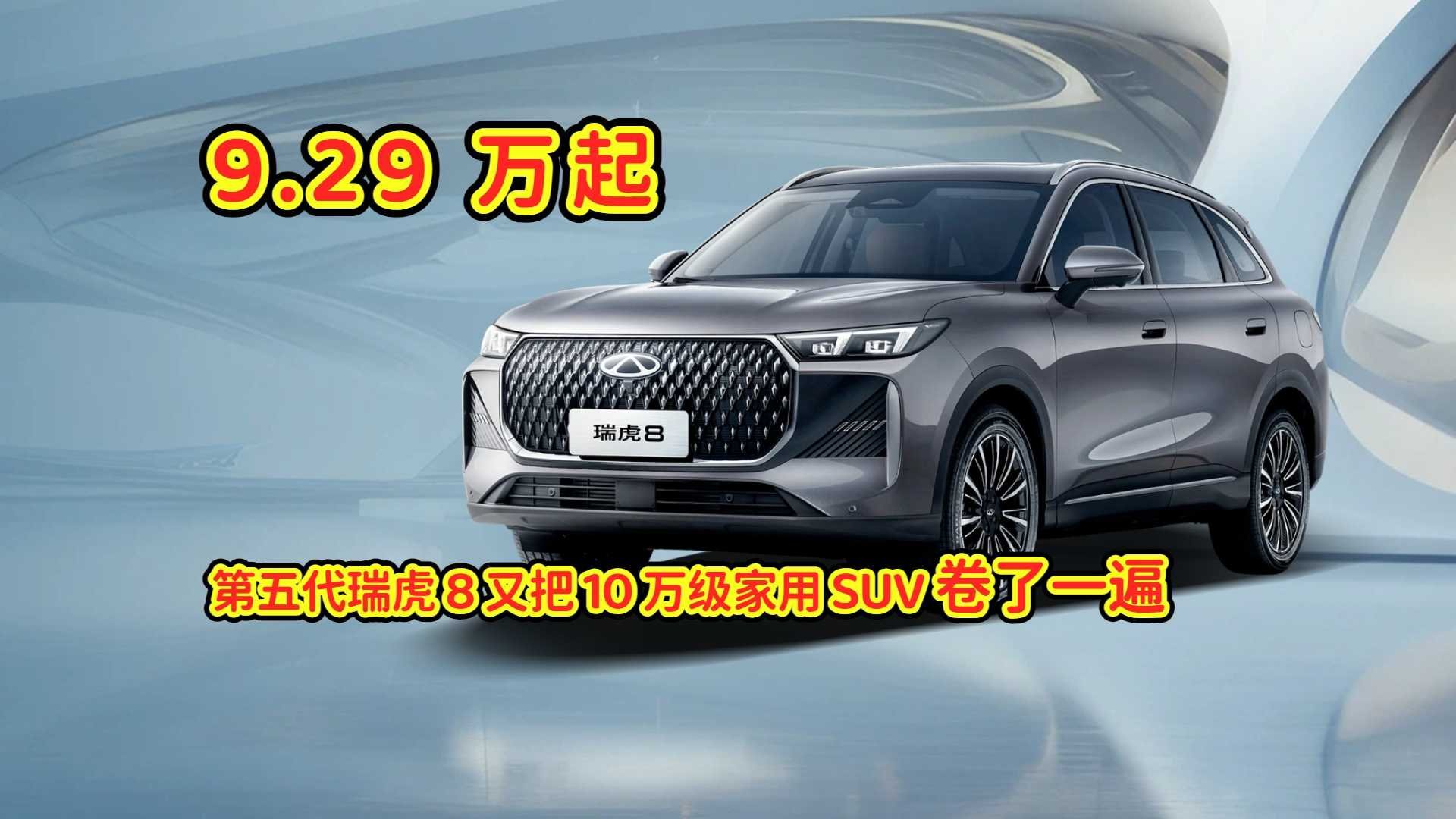
On November 10, the fifth-generation Chery Tiggo 8 was officially launched, with 4 models offered, official guide price 99,900—129,900 yuan, and with the limited-time early-bird price, the starting price was pulled down to 92,900 yuan.
At a time when "joint-venture compact models are all running into the low 100,000s," this move by Chery is clearly aimed at becoming "the first choice for a 100,000-yuan-class family mid-size SUV."

I. How to choose by price? The role of each of the four trims
The models and prices of this fifth-generation Tiggo 8 are as follows:
Comfort: 99,900 yuan / limited-time 92,900 yuan
Luxury: 109,900 yuan / limited-time 102,900 yuan
Premium: 119,900 yuan / limited-time 112,900 yuan
Flagship: 129,900 yuan / limited-time 122,900 yuan
In terms of positioning, it can roughly be understood as:
Comfort: responsible for bringing the threshold below 100,000; most families on a tight budget but needing space can start here;
Luxury: will usually be the volume-selling trim, more balanced in safety, comfort, and intelligent features, and most suitable for those users who "want a little of everything";
Premium / Flagship: aimed at those who are more particular about how a car is used, with face, quality, and materials all moving up another notch.
If you are just looking for a car for the family's main commuting plus weekend outings, it is generally recommended to look from the Luxury trim upward, as the value for money is usually more outstanding.
II. Exterior: two front faces, two personalities
The changes to the fifth-generation Tiggo 8 can actually be seen at first glance—
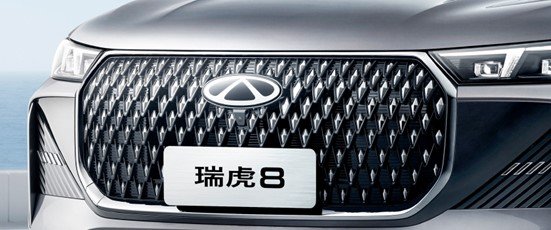
One is a polygonal grille continuing the family approach, with a dotted chrome interior, more stable overall, with a typical "family-oriented" tone;
The other switches to a more aggressive honeycomb grille, with a fiercer visual effect, clearly aimed at younger users.
This "dual front face" strategy is now very common among Chinese brands, and its advantage is also very direct: the same body structure uses two temperaments to cover a wider audience, without having to force a choice of car for the sake of style.
The side lines are relatively straight, paired with a slightly rising waistline, and the overall proportions are quite easy on the eyes, without sacrificing headroom and trunk space for the so-called "coupe feel."
The semi-hidden door handles count as a small touch: cleaner than traditional pulls, and also slightly helpful for wind resistance and detail perception.
In terms of dimensions, the body length, width, and height are 4749/1880/1710 mm respectively, with a wheelbase of 2825 mm, already the size of a standard mid-size SUV. For family use, the meaning of this set of data is simple—second-row seating posture and trunk loading do not really need to worry about a "cramped feel."
The rear has been fitted with a new-style through-type taillight, with slight outward expansion at both ends, making it more recognizable when lit at night than the previous generation. The lower bumper has two styles:
One is hidden exhaust, leaning family-oriented; the other is a dual-side total two-outlet decoration, leaving the owner a little "performance imagination space."
III. Interior: two approaches, horizontal screen and vertical screen
If the exterior is "two faces," then the interior is "two schools."
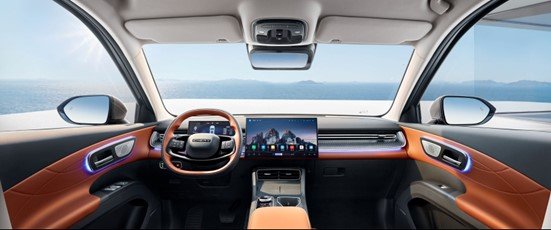
According to official information, the fifth-generation Tiggo 8 will offer two interior screen layouts:
One is a horizontal integrated connected screen closer to the current model, with the instrument cluster and center console connected together, looking more like "one whole" and visually more orderly;
The other adopts a large vertical center console screen, making the interior central axis more prominent, and the operation logic will be closer to the phones and tablets everyone is used to.
Behind these two solutions are actually two kinds of car-use preferences: some care about "an integrated sense of tech when sitting inside," while others prefer "as long as the center screen is a bit better and easy to use." This time the fifth-generation Tiggo 8 did not forcefully bet on one, but directly offered both.
The steering wheel, meanwhile, has been uniformly replaced with a new-style two-spoke multifunction steering wheel, simpler than the previous generation's design, with cleaner detailing lines, consistent with the exterior's "rejuvenation."

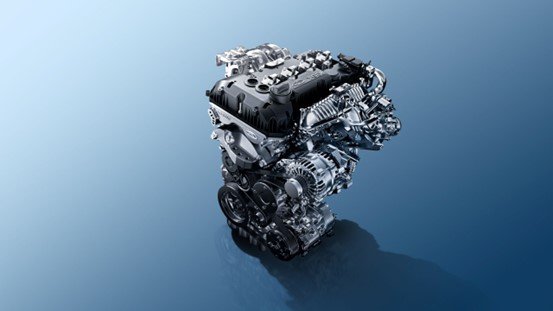
IV. Powertrain: the familiar 1.6T continues to carry the banner this time
For the powertrain, the fifth-generation Tiggo 8 did not play any "fancy tricks," using the Kunpeng 1.6TGDI direct-injection turbocharged engine that Chery has already verified on multiple models in recent years:
Maximum power: 147 kW
Peak torque: 310 N·m
Transmission: 7-speed wet dual-clutch
The advantages of this powertrain no longer need a long introduction—mature, reliable, with sufficient power reserve, it is a combination quite familiar to editors and consumers.
For daily urban commuting, the 1.6T+7DCT pairing at this level will basically not hold you back in overtaking and high-speed cruising; for families who often run long distances fully loaded with old and young, this level of power will not make people uneasy either.
Of course, compared with those competitors focusing on hybrids and plug-in hybrids, the fuel version may not have an absolute advantage in fuel consumption, but it wins in a relatively simple mechanical structure, and the psychological pressure of usage cost and later maintenance will be smaller—which is exactly why many traditional users still insist on choosing fuel vehicles.
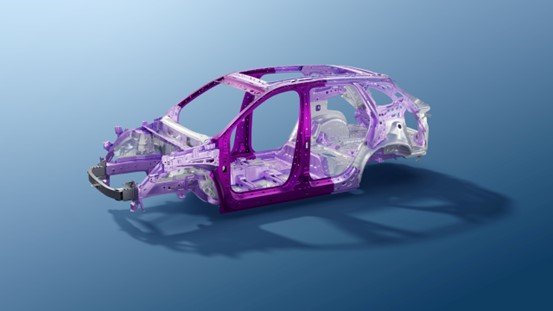
V. Who is it suitable for? Summarizing the usage scenarios in one sentence
After breaking down the information and putting it back together, the portrait of the fifth-generation Tiggo 8 is actually very clear:
Budget between 100,000 and 130,000;
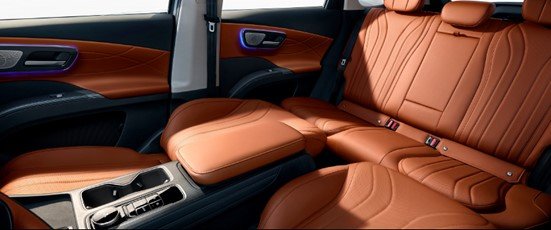
The family really needs a mid-size SUV with neat space and a comfortable seating posture;
Still waiting and watching on pure electric and plug-in hybrid for now, and more inclined to use a mature fuel vehicle for the first five or six years;
Want both a respectable exterior and no sacrifice of daily practicality.
For this type of user, what the fifth-generation Tiggo 8 does is not "how stunning," but rather recomposing the points people really care about—space, price, power, appearance—and, along the way, taking a small step forward in design.
If an initial recommendation is to be given from an editor's perspective:
The Luxury trim can be a key focus, and is very likely to be the one with the most balanced features and price;
If the budget is very tight and you only want a large-space tool car for occasional self-driving trips, you can look at the Comfort trim;
If you usually have more business receptions, or have higher requirements for materials and atmosphere, you can go straight for Premium or Flagship, saving yourself from wanting to change cars later because of "small regrets."
Overall, the fifth-generation Tiggo 8 is not the kind of product that grabs attention with one explosive point, but more like a family car that has its accounts figured out relatively clearly:
The price is aggressive enough, the space is sufficient, the design does not fall behind, and the power does not lag.
For many families currently hesitating over "whether to stretch for a joint-venture compact or steadily buy a domestic mid-size," it is very likely to be a car that firmly lands right at the intersection of their budget and needs.


