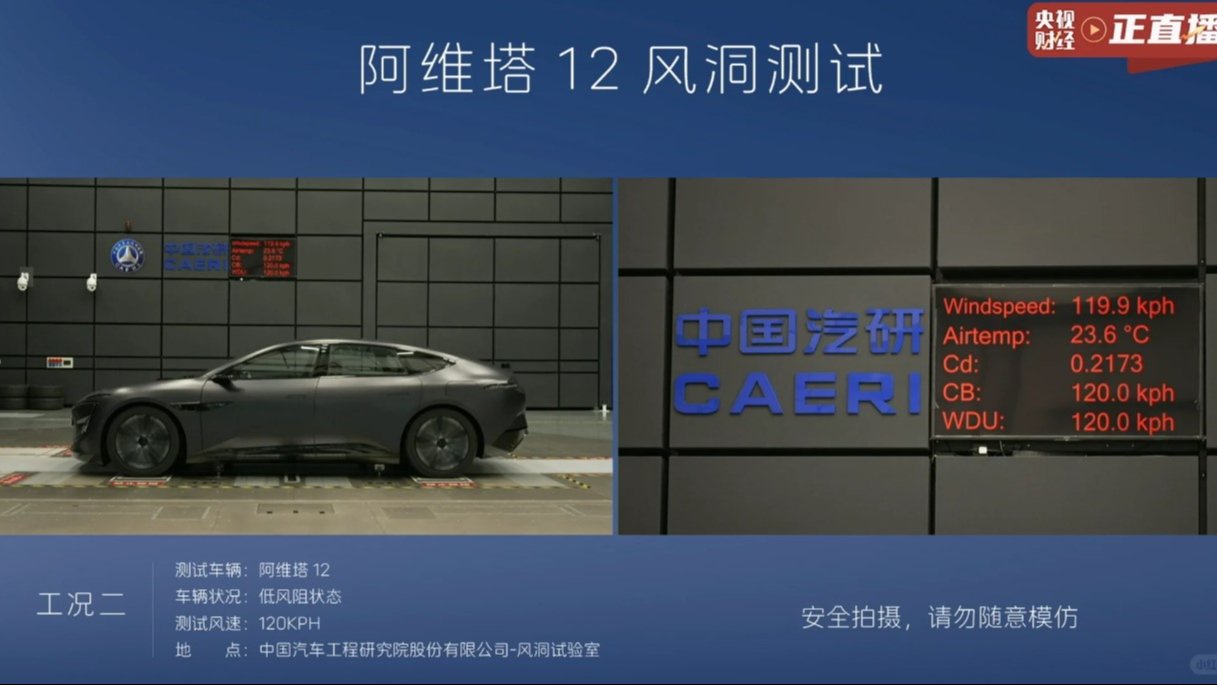
On May 9, Avatr Automotive conducted a public live test of the drag coefficient controversy surrounding its models through the wind tunnel laboratory of the China Automotive Engineering Research Institute.
This test simulated six driving conditions and verified the vehicle's aerodynamic performance through different configuration combinations, aiming to respond to previous online questions about its "drag coefficient fraud."
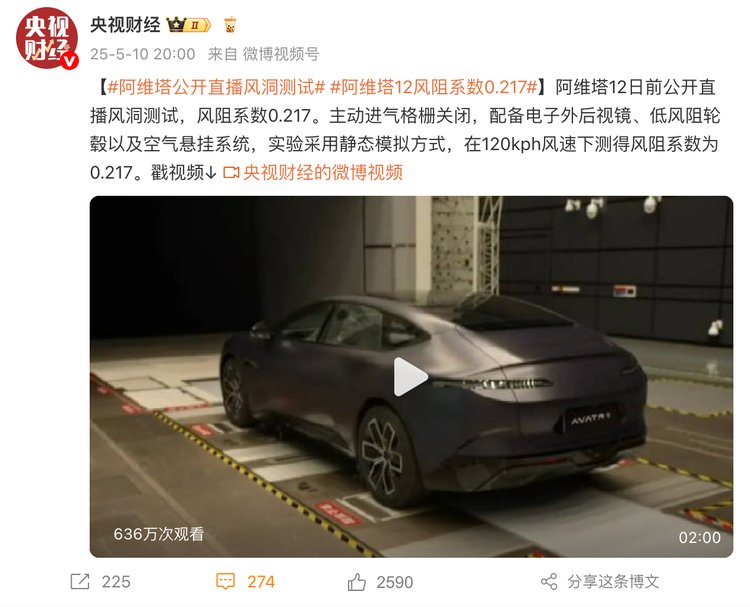
This test originated from the controversy over the discrepancy between the 0.28Cd measured result published by an automotive blogger in early May and the officially claimed 0.21Cd.
Avatr engineers explained that the drag coefficient should theoretically be an inherent value, and the differences in actual tests stem from wind tunnel environmental variables and sensor accuracy, rather than the parameter changing with vehicle speed.
Avatr Vice President Yong Jun emphasized that the public live test was intended both to clarify the controversy and to promote transparency in industry testing standards.

It is reported that the wind tunnel laboratory of China Automotive Engineering Research Institute, as a national authoritative testing institution, strictly follows ISO international standards in its testing conditions. Avatr also announced that it will work with third parties to trace the sources of false information and will continue to publicly disclose the technical verification process in the future. At present, this incident has triggered in-depth discussion within the industry on the aerodynamic calibration specifications and disclosure standards for new energy vehicles.