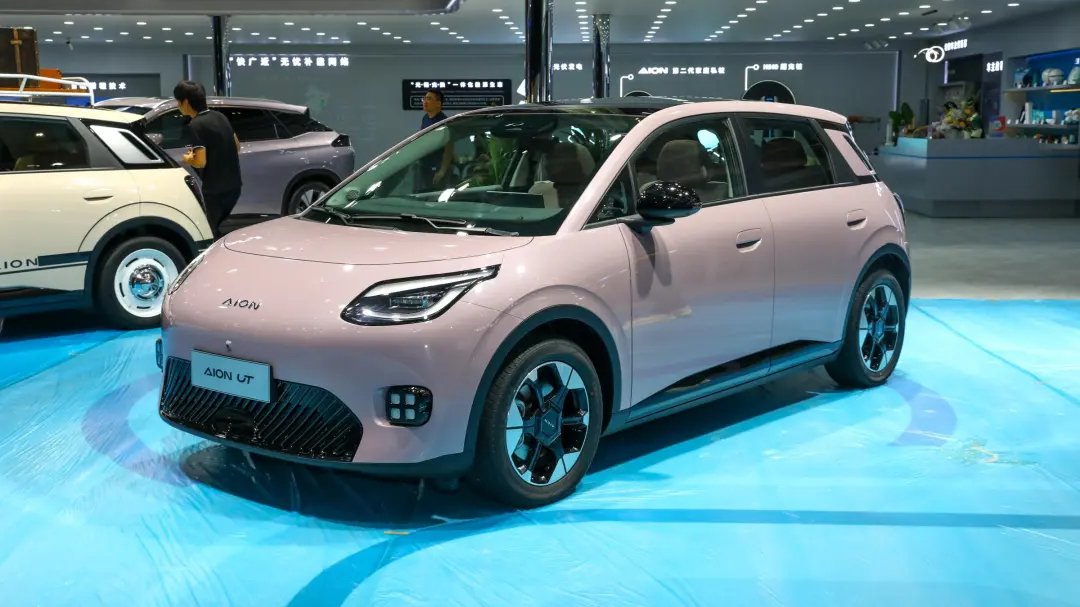
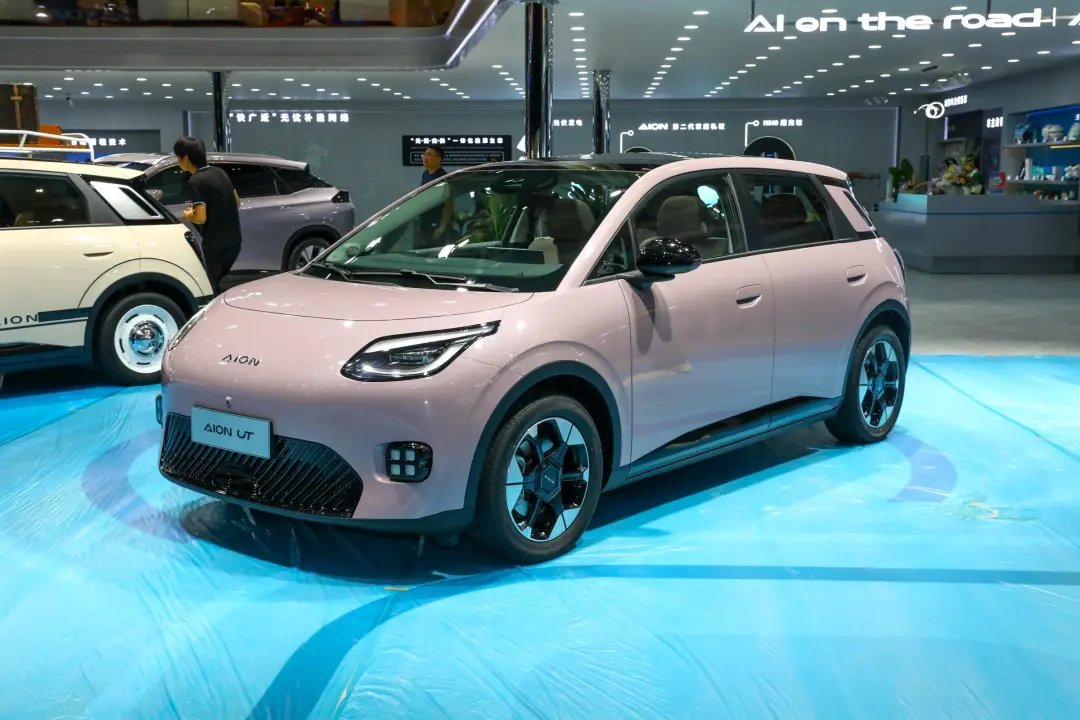
On the evening of February 28, GAC Aion's all-new model, the AION UT, was officially launched. The new car is offered in 5 variants, with a price range of 69,800 yuan to 101,800 yuan.
1. Another Fierce Contender in the Price War: Where Does the AION UT's "Kill Power" Come From?
When GAC Aion announced that the AION UT would start at 69,800 yuan, the market was in an uproar. In the 100,000-yuan-class all-electric hatchback market dominated by the BYD Dolphin (starting at 102,800 yuan) and the Volkswagen ID.3 (starting at 125,900 yuan), the UT directly pulls the price threshold down by more than 30,000 yuan. This is not just "flipping the table" — it is重构 the pricing logic of the entire market.
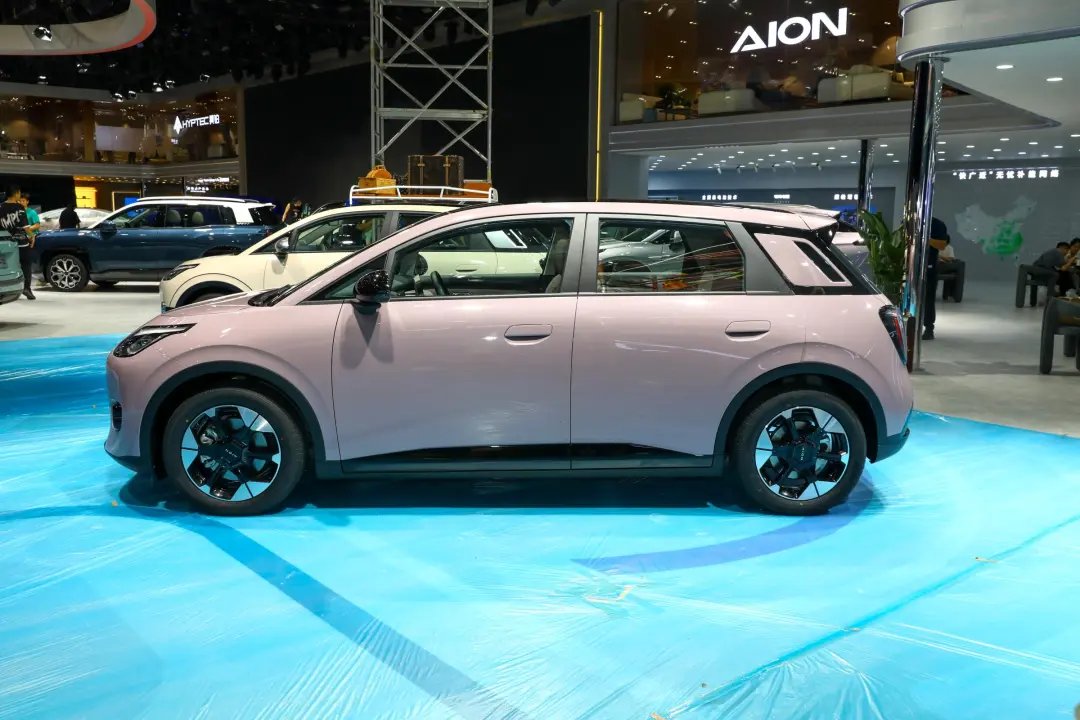
From the perspective of technical specifications, the UT's "cost-effectiveness" label is not groundless: the entire lineup comes standard with reverse AEB automatic emergency braking, CLTC range of 420 kilometers, a 100kW motor, and class-leading space performance brought by a 2750mm wheelbase. Compared with the Wuling Bingo (333km range/2560mm wheelbase) or the Leapmotor T03 (403km range/2400mm wheelbase) at the same price point, the UT forms a generational suppression in core performance indicators. More notably, its combination of a 14.6-inch central control screen and an 8.8-inch LCD instrument cluster, as well as a vehicle system compatible with three major smartphone interconnection ecosystems, directly targets the level of 150,000-yuan-class intelligent cockpits.
2. Product Strength Breakdown: Precise Knife Work or a Balanced Trap?
1. Design Game: User Insights Behind the Cute Aesthetics
The UT adopts design language such as a "田"-shaped front face light group and two-tone body colors, forming a clear distinction from the BYD Dolphin's ocean aesthetics and the ID.3's German-style minimalism. Among the 6 body colors, names such as Monet Purple and翡冷翠 directly target young female users, and combined with the agile handling brought by a 4270mm vehicle length, it is clearly intended to capture the urban commuting crowd. But the risk is that an overly distinctive style may limit the breadth of the audience — just as the "female-exclusive" positioning of the Ora Good Cat has brought a growth ceiling.
2. Configuration Trade-offs: The Strategic Ambition Behind Standard AEB Across the Lineup
When most automakers offer AEB (automatic emergency braking) only as a high-trim exclusive, the UT's strategy of making it standard across the lineup can be called a dimensionality-reduction strike. This reflects GAC Aion's confidence in cost control for intelligent safety configurations: relying on the GEP 2.0 dedicated pure electric platform and Yinpai battery technology, the volume grouping efficiency of its battery pack has increased to 78%, and the manufacturing cost of the complete vehicle has dropped by 15% compared with the previous-generation platform. But this also brings hidden concerns — the entry-level version is equipped with only 2 airbags. Will this expose shortcomings in crash tests?
3. Range and Recharging: The Sweet Spot and Anxiety Point of 420km
The UT's CLTC 420km range happens to sit right at the critical point of "enough for urban commuting, barely enough for intercity travel." Compared with the actual performance of the Dolphin's 401km (NEDC), if the UT can exceed an 85% real-world range achievement rate, it will form a significant competitive advantage. However, limited by the 6.6kW slow-charging configuration (competitors generally standardize 7kW), its charging efficiency may become a weak link in the user experience.
3. Market Dilemma: Aion's "One-Legged Jump" Crisis and the UT's Mission to Break the Deadlock
Of GAC Aion's 349,000 vehicle sales in 2024, the AION Y and S models accounted for as much as 84.77%. This structural risk is especially dangerous at a time when the new energy market is accelerating its differentiation. The launch of the UT is essentially Aion's key battle to break out from being a "ride-hailing specialist" (AION S ride-hailing share exceeds 60%) into the consumer market.
Three-Dimensional Perspective on the Competitive Landscape:
Price Band Dislocation: Entering the middle ground between the BYD Seagull (starting at 73,800 yuan) and the Wuling Bingo (starting at 59,800 yuan) at 69,800 yuan, forming "the price of a high-trim Bingo, the experience of a quasi-Dolphin."
Technological Generation Gap Window: Compared with the ID.3, which still uses a 12-inch central control screen and the MEB oil-to-electric platform, the UT's GEP 2.0 native platform has an inherent advantage in space utilization.
Channel Momentum Conversion: Aion has more than 300 experience centers nationwide. If it can replicate NIO's model of "supercharging stations + mall stores," it is expected to quickly build user awareness.
But the hidden dangers are equally obvious: in 2023, Aion's dealer inventory coefficient once reached as high as 2.1 (the healthy industry level is 1.5). If the UT cannot ramp up volume quickly, it may intensify channel pressure. The officially set monthly sales target of 10,000 to 15,000 vehicles is equivalent to seizing more than 30% share of this segment, which is by no means easy in an area where BYD and Wuling have already established moats.
4. The Ultimate Question: Is the UT a Savior or a Disruptor?
From an industry perspective, the AION UT's pricing strategy marks the official entry of all-electric hatchbacks into the deep-water zone of "oil-electric price parity." Its starting price of 69,800 yuan is already lower than that of same-class fuel vehicles (such as the Fit starting at 81,800 yuan and the POLO starting at 90,900 yuan), which is of milestone significance for the fuel vehicle replacement process. But it is necessary to be alert to the profit margin pressure brought by the price reduction: calculated with a 44.12kWh battery pack, the battery cost alone already exceeds 30,000 yuan, and the vehicle BOM cost may be approaching the red line of the selling price.
For consumers, the UT offers the possibility of "spending little money to accomplish big things," but its long-term reliability still needs time to verify. Referring to J.D. Power data, Aion brand's 2023 problems per 100 vehicles (PP100) was 187, better than the industry average (210), but still lagging behind BYD (162). If the UT can make a breakthrough in quality control, it may reshape the value standard for 100,000-yuan-class electric vehicles.
Conclusion: A High-Stakes Gamble with No Retreat
The AION UT's entry is both GAC Aion's fight with its back to the river to break free from the "unbalanced student" label and a microcosm of intensifying involution in China's new energy market. As the price war escalates from "hurting the enemy a thousand while losing eight hundred of one's own" to a "life-and-death game of exchanging price for volume," whether the UT can carve out a new channel in the red ocean with precise knife work may depend not on the product itself, but on whether Aion can reconstruct overall efficiency from R&D to channels. The outcome of this battle will profoundly affect the power landscape of the 2025 new energy market.


